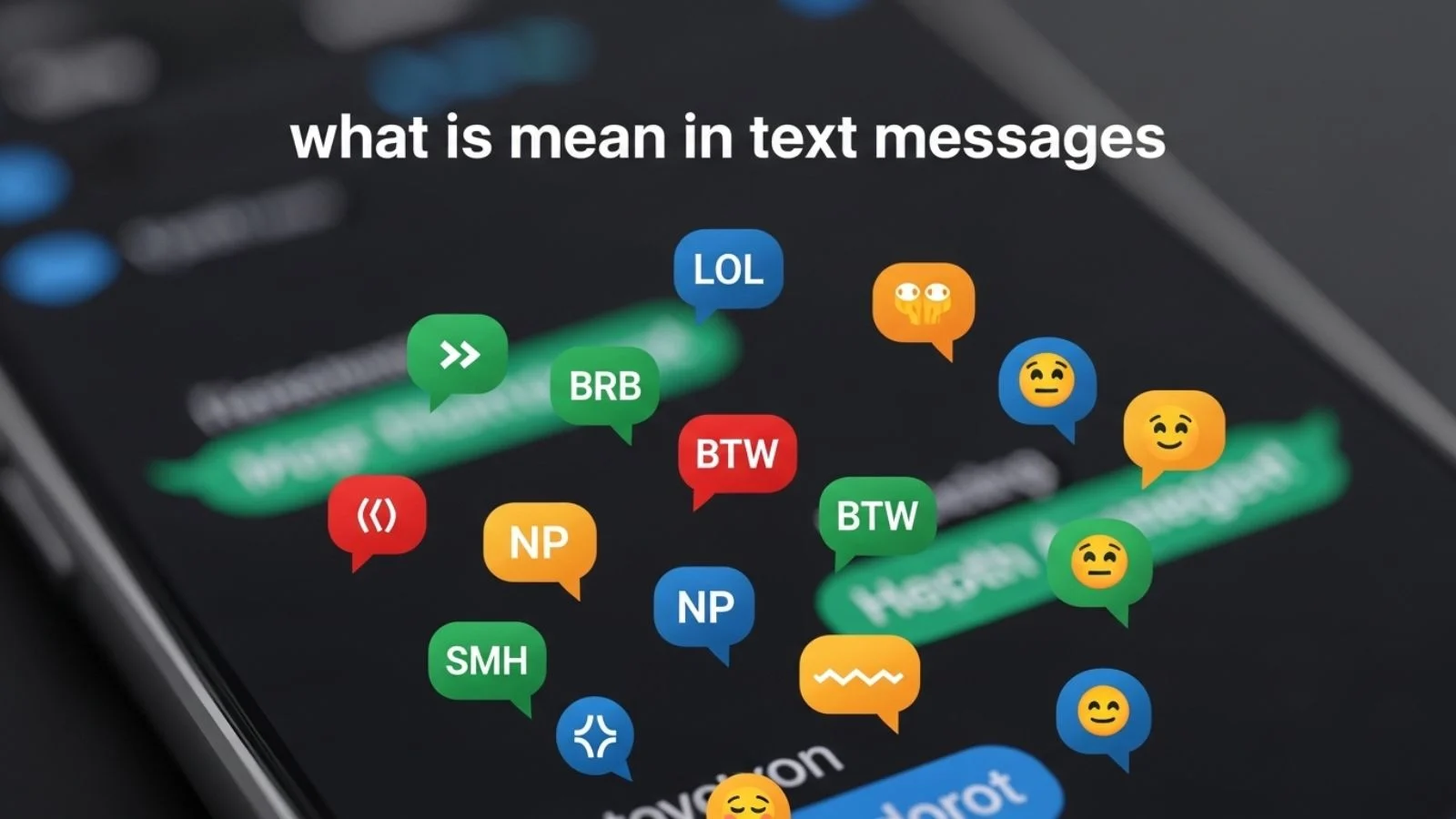
When someone asks, “what does mean mean in text?”, they are usually referring to how the word “mean” is used in casual messaging. In text messages, mean can have slightly different shades depending on context:
- Literal Definition:
- To intend or signify something.
- Example: “I didn’t mean to hurt you.”
Explanation: Here, the person is saying their actions weren’t intended to cause harm.
- Colloquial Text Meaning:
- Sometimes, in chats, mean describes being harsh, rude, or jokingly critical.
- Example: “You’re so mean!”
Explanation: This usually refers to playful teasing or actual rudeness, depending on tone.
- Flattering/Admiring Context:
- Occasionally, “mean” is used to describe skill or talent.
- Example: “He’s got a mean guitar solo.”
Explanation: Here, “mean” means impressive or very good.
Origin and History of the Word “Mean”
The word mean has been part of the English language for centuries.
- Old English Origins: The word “mean” comes from Old English gemǣne, meaning “common, shared, general.”
- Middle English Evolution: By the Middle Ages, it also took on the sense of “intend” or “have a purpose.”
- Modern Usage: In the 20th century, “mean” evolved into slang forms like “that’s mean” (rude) or “mean skills” (impressive abilities).
So, texting just reflects these older meanings, condensed into quick, casual communication.
Real-Life Examples of “Mean” in Texting
Here are common ways mean is used in 2026 text conversations:
Example 1: Expressing Intent
- Text: “I didn’t mean to ignore your message.”
- Explanation: The sender is clarifying they did not intend to be rude.
Example 2: Playful Teasing
- Text: “You’re mean for stealing my fries!”
- Explanation: The person is joking, not truly upset.
Example 3: Complimenting Skills
- Text: “Wow, you play a mean piano piece.”
- Explanation: “Mean” here shows admiration for skill.
Example 4: Responding to Sarcasm
- Text: “Oh, that was mean.”
- Explanation: The receiver notices sarcasm or slight harshness in a message.
Personality Traits or Usage Context
People who use mean in texts can show different traits depending on context:
| Context | Personality Trait | Example Text |
|---|---|---|
| Expressing intention | Thoughtful, apologetic | “I didn’t mean to upset you.” |
| Playful teasing | Humorous, friendly | “You’re so mean for hiding my pen.” |
| Complimenting skill | Appreciative, enthusiastic | “You have a mean jump shot!” |
| Pointing out sarcasm | Observant, witty | “Wow, that was mean!” |
Tip: Tone and emojis (if used) often clarify which meaning of mean is intended.
Common Mistakes or Misconceptions
- Assuming “mean” is always rude:
- Many beginners think any use of mean is negative. Context matters.
- Confusing “mean” with “means”:
- Example: “What does this mean?” vs. “This means…”
- Explanation: “Mean” is the verb; “means” can be a noun or third-person singular verb.
- Overusing “mean” in chats:
- Saying “You’re mean!” too often may confuse tone between joking and serious.
- Ignoring tone indicators:
- Texts lack voice cues. Use context or emojis to avoid misunderstandings.
Modern & Relatable Examples (2026 Update)
Here are examples relevant for 2026 digital communication:
- Gaming: “He’s got a mean strategy in Fortnite.”
Explanation: Means very skilled. - Social Media Reactions: “That comment was mean.”
Explanation: Could indicate sarcasm, critique, or playful banter. - Work Chat (Professional): “I didn’t mean to miss the deadline.”
Explanation: Polite way to apologize in professional messaging apps. - Streaming Chat: “She’s got a mean voice in the new song.”
Explanation: Means impressive or powerful.
Short Dialogues Using “Mean”
Dialogue 1: Texting a Friend
- A: “You’re mean for taking my seat!”
- B: “Haha, I didn’t mean it. Sorry!”
Explanation: Shows playful teasing and apology.
Dialogue 2: Work Chat
- A: “I didn’t mean to send the wrong file.”
- B: “No worries, just resend it.”
Explanation: Professional context clarifying intent.
Dialogue 3: Complimenting Skills
- A: “Your drawing is mean!”
- B: “Thanks! I practiced a lot.”
Explanation: “Mean” here is a positive compliment.
Lists of Common Uses
Top 5 Uses of “Mean” in Texts:
- Expressing intention – I didn’t mean to hurt you.
- Pointing out rudeness – That was mean!
- Joking/teasing friends – You’re so mean!
- Complimenting skill – He has a mean serve.
- Sarcasm detection – Wow, that’s mean.
Tips for Beginners:
- Always check context.
- Pair with tone indicators like emojis or punctuation if necessary.
- Observe the sender’s usual texting style.
FAQs About “Mean” in Text Messages
1. Does “mean” always imply rudeness?
No. Mean can be playful, serious, or complimentary depending on context.
2. How do I know which meaning is correct?
Check the tone, previous messages, and the relationship between texters.
3. Can “mean” be positive?
Yes. Phrases like “mean skills” or “mean performance” show admiration.
4. Is “mean” common in professional chats?
Rarely in the playful sense, but it’s often used to clarify intent politely.
5. Can “mean” be misunderstood?
Yes. Texts lack tone, so readers may interpret it as rude if context isn’t clear.
6. How do I use “mean” in slang?
Use it to describe skill or talent casually: “She plays a mean guitar.”
7. What is the difference between “mean” and “mean to”?
- Mean alone refers to intention or quality.
- Mean to emphasizes purpose or action: “I didn’t mean to upset you.”
Conclusion
The word “mean” is simple but versatile in text messages. It can show intent, describe teasing, or even praise skills. Understanding the meaning depends heavily on context, tone, and relationship between texters. By paying attention to these clues, beginners can avoid misunderstandings and use mean confidently in both casual and professional messages.
If you want to improve your texting skills further, try reading conversations carefully and noting how words like mean change depending on the context. Start experimenting in your chats and see how meaning shifts in playful, serious, or professional tones.