If you’ve been scrolling through social media or chatting with friends lately, you might have seen someone type “ion know,” “ion want that,” or “ion care.”
And naturally, you probably paused and thought:
What does “ion” even mean in text message?
It looks like a typo. It feels confusing. But it’s actually a very common slang expression used in casual online conversations, especially on platforms like TikTok, Snapchat, and Instagram.
In this guide, you’ll learn exactly what “ion” means, how people use it, and why it has become so popular in modern texting culture.
What Does “Ion” Mean in Text Message?
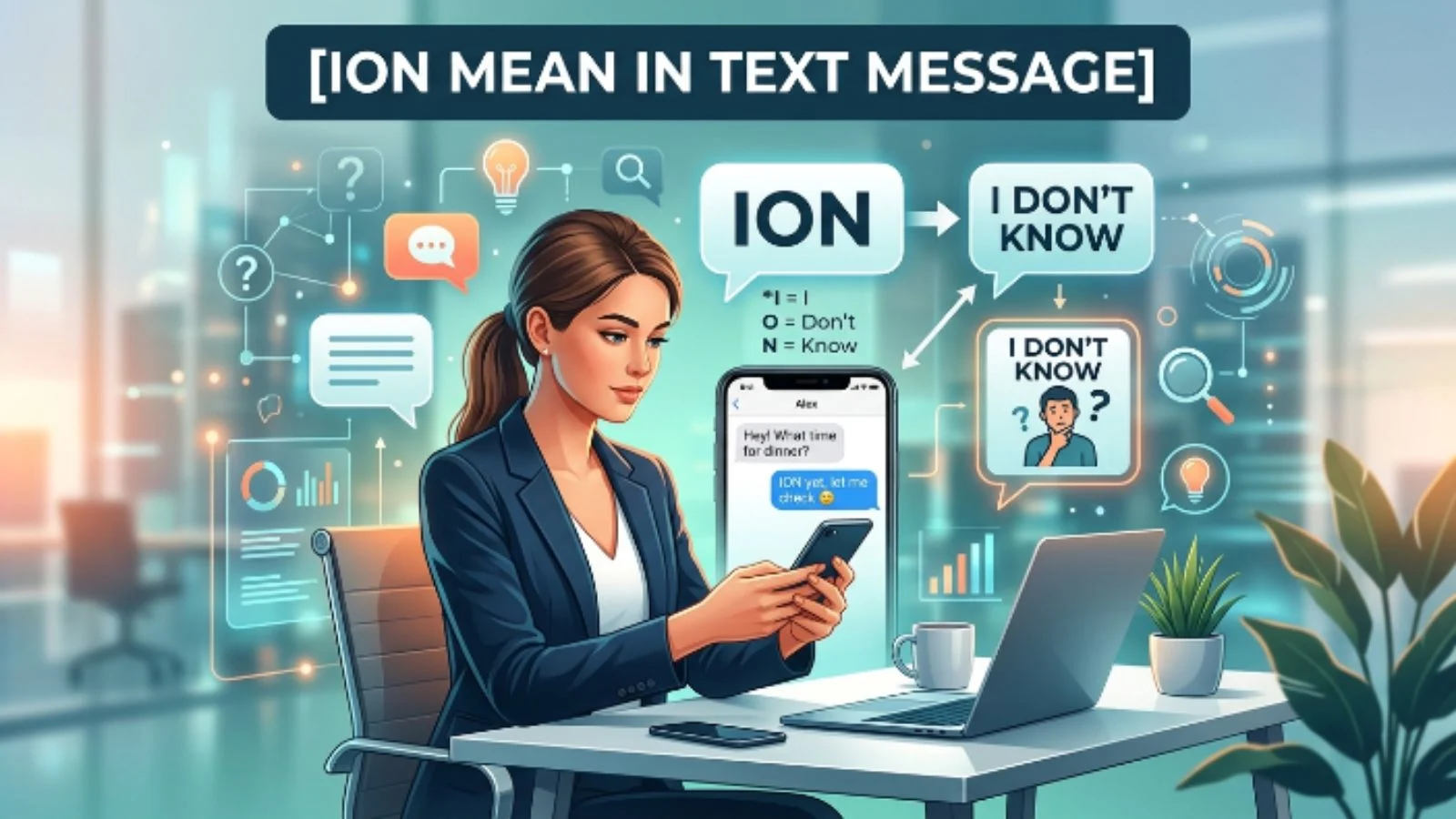
The word “ion” in texting is a slang abbreviation for “I don’t.”
It comes from fast, informal pronunciation in spoken English, especially in African American Vernacular English (AAVE), where “I don’t” often sounds like “ion” when spoken quickly.
So instead of writing:
- “I don’t know”
People write:
- “Ion know”
Simple definition:
“Ion” = “I don’t” in casual texting language.
It is not a formal English word. It is internet slang used for quick, relaxed communication.
Simple Meaning (Explained in Easy Words)
To make it even simpler:
When someone writes “ion,” they are just saying:
- I don’t
- I am not (in some contexts)
- I do not (depending on the sentence)
It is basically a shortcut version used in texting to save time and sound more natural in casual speech.
Example breakdown:
- Ion know = I don’t know
- Ion care = I don’t care
- Ion want that = I don’t want that
It is all about speed and informal tone.
Where Is “Ion” Used?
You will mostly see “ion” in informal online spaces, not in professional or academic writing.
Common platforms:
- TikTok comments and captions
- Snapchat chats
- Instagram DMs and comments
- Twitter (X) posts
- Casual texting with friends
Real-life situation:
Imagine a friend asks:
“Are you going to the party tonight?”
You reply:
“Ion think so.”
It simply means:
“I don’t think so.”
Why Do People Use “Ion”?
People don’t use “ion” because they are trying to confuse others. It actually has a few practical and cultural reasons behind it.
1. Speed typing
Typing “ion” is faster than writing “I don’t.”
2. Casual tone
It makes messages feel relaxed and informal.
3. Social media trend
TikTok and memes have made it popular among younger users.
4. Speech-based spelling
It reflects how people naturally speak in fast conversation.
5. Identity and style
Many slang words become part of online identity and group communication style.
Examples of “Ion” in Real Conversations
Let’s look at real-life style examples so you fully understand how it works.
Example 1: Daily chat
Friend: “Do you like this movie?”
You: “Ion really like it.”
Meaning: I don’t really like it.
Example 2: Plans
Friend: “Are you coming out tonight?”
You: “Ion think I can.”
Meaning: I don’t think I can.
Example 3: Opinions
Friend: “Do you care about the drama?”
You: “Ion care at all.”
Meaning: I don’t care at all.
Example 4: Confusion
Friend: “Do you understand this?”
You: “Ion know what’s going on.”
Meaning: I don’t know what’s going on.
“Ion” vs Similar Terms
Here is a simple comparison to help you understand how “ion” differs from similar slang.
| Slang Term | Meaning | Usage |
|---|---|---|
| ion | I don’t | Very casual texting and social media |
| idk | I don’t know | Common across all platforms |
| im not / I’m not | I am not | More formal than ion |
| don’t / dont | Negative form | General usage |
| nah | No / I don’t think so | Informal spoken tone |
Key difference:
“Ion” is more slang-based and closely tied to spoken casual language, while “idk” is more universal.
When Should You Use “Ion”?
Using slang like “ion” depends on the situation.
Good times to use it:
- Talking to friends online
- Casual social media comments
- Informal chats
- Meme or joke content
Avoid using it when:
- Writing school assignments
- Professional emails
- Job applications
- Formal communication
Simple rule:
If the conversation is casual, “ion” is fine. If it’s serious or formal, avoid it.
Common Misunderstandings About “Ion”
Many people misunderstand this slang when they first see it.
Misunderstanding 1: It’s a typo
No, it’s not a typing mistake. It is intentional slang.
Misunderstanding 2: It means “ion” like a science term
In science, “ion” is a charged particle. But in texting, it has nothing to do with chemistry.
Misunderstanding 3: It’s random internet gibberish
It actually comes from spoken language patterns, not random letters.
Pro Tips for Using “Ion” Correctly
If you want to use “ion” naturally, keep these tips in mind:
1. Keep sentences simple
It works best in short, casual sentences.
2. Don’t overuse it
Using it in every message can look unnatural.
3. Match your audience
Only use it with people who understand slang.
4. Avoid formal settings
Never use it in professional communication.
5. Understand context
“Ion” always depends on the sentence—it usually means “I don’t,” but meaning can shift slightly.
Final Thoughts
So, what does “ion mean in text message”?
It simply means “I don’t” in informal slang used in online conversations and texting.
Even though it looks strange at first, it’s just a natural evolution of language shaped by fast typing and social media culture.
The key is knowing when to use it and when to avoid it. In casual chats, it fits perfectly. In formal situations, it’s better to stick to standard English.
Language keeps evolving, and “ion” is just one of those modern shortcuts that show how people really talk online.
FAQ Section
1. What does ion mean in text message?
“Ion” means “I don’t” in casual texting and social media slang.
2. Is ion a real English word?
No, it is not a formal English word. It is slang based on spoken language.
3. Where is ion commonly used?
It is mostly used on TikTok, Snapchat, Instagram, and casual texting.
4. Can I use ion in professional writing?
No, it should only be used in informal conversations.