Have you ever received a text that says “SRS?” or “I’m srs” and wondered what the person actually meant?
Texting slang can sometimes feel confusing because the same short word may have a different meaning depending on the conversation. Fortunately, SRS is usually easy to understand once you know the context.
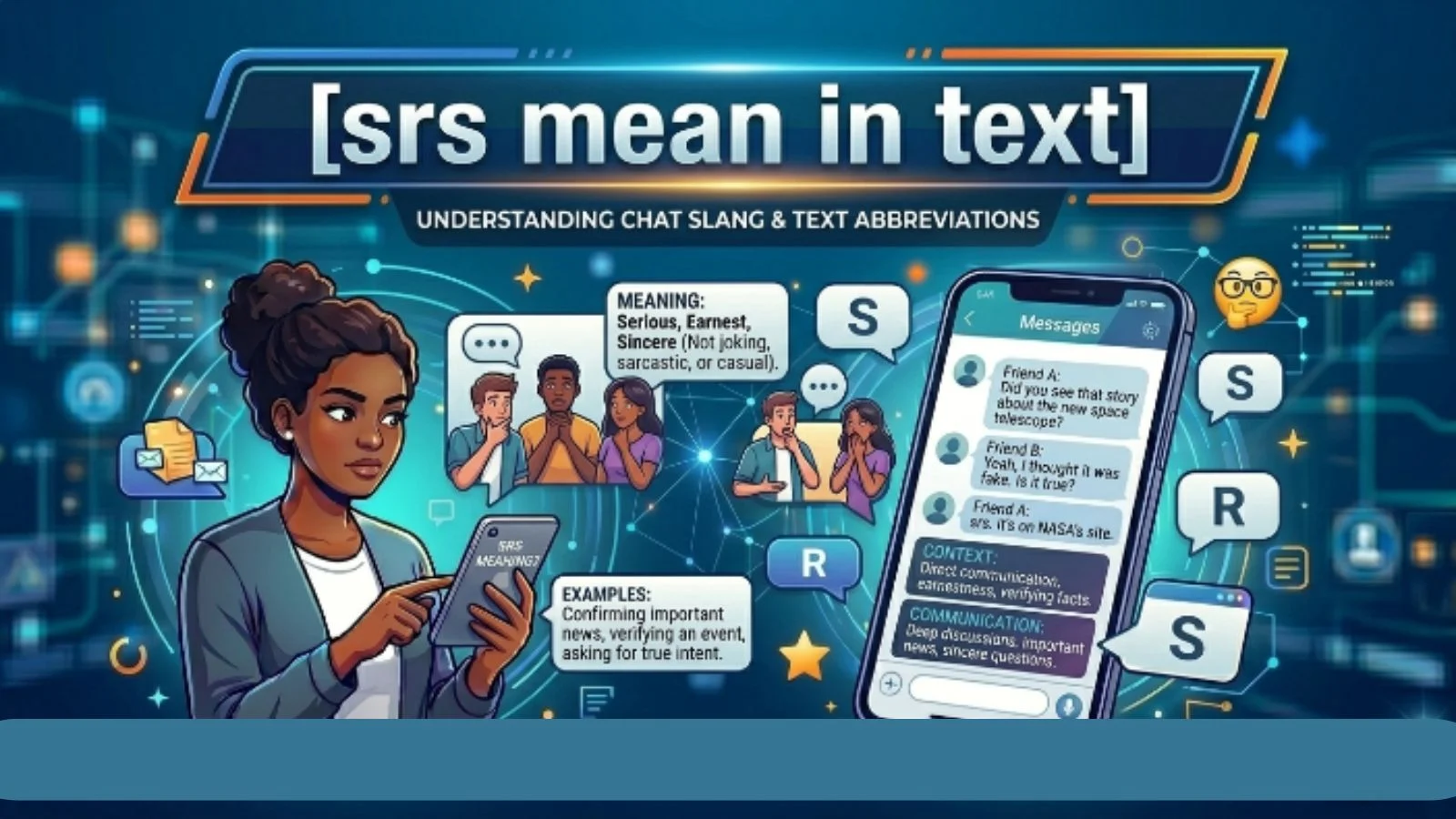
In texting, SRS most commonly means “serious.” People use it as a shortened form of “serious” to save time, emphasize a statement, or ask whether someone is being genuine.
For example:
“Are you srs right now?”
This means:
“Are you serious right now?”
But there is more to SRS meaning in text than simply replacing the word “serious.” It can express surprise, disbelief, concern, or emphasis depending on how it is used.
Let’s break it down with simple explanations and real-life examples.
What Does SRS Mean in Text?
SRS in text usually means “serious.”
It is an informal abbreviation commonly used in online conversations, text messages, social media, gaming chats, and messaging apps.
For example:
- “Are you srs?”
- “I’m srs about this.”
- “Srs, you need to try this.”
- “Wait, srsly?”
In each example, SRS refers to being serious or genuine.
The abbreviation is especially common when someone wants to type quickly or make a message sound casual.
Quick Definition
SRS = Serious
It can mean that someone is being genuine, sincere, or not joking.
The exact feeling behind it depends on the conversation and the words surrounding it.
SRS Meaning in Simple Words
In the simplest terms, SRS means “serious.”
When someone writes “srs,” they may be saying:
- “I really mean it.”
- “I’m not joking.”
- “I’m being serious.”
- “Is that really true?”
- “Are you actually serious?”
For example:
Person 1: “I’m going to quit my job tomorrow.”
Person 2: “Srs?”
Here, “Srs?” means “Are you serious?”
Another example:
“I’m srs about learning Spanish this year.”
This means the person is genuinely committed to learning Spanish.
So, when you see SRS in a message, look at the context before deciding exactly what the person means.
Where Is SRS Used?
SRS is mostly used in informal digital communication.
You may see it on:
- Text messages
- TikTok
- Snapchat
- Facebook Messenger
- Discord
- Online forums
- Gaming chats
- Group chats
- Casual social media comments
It is generally more appropriate for conversations with friends, online communities, or people who already understand casual internet language.
You probably would not use “srs” in a formal business email or professional document.
For example, instead of writing:
“Are you srs about the meeting?”
in a professional email, it would be better to write:
“Are you serious about the meeting?”
Why Do People Use SRS?
There are several reasons people use SRS instead of writing the full word “serious.”
1. It Saves Time
People often use abbreviations because they can type them quickly.
Instead of:
“Are you serious?”
they can simply write:
“Are you srs?”
This is particularly common in fast-moving chats.
2. It Keeps the Conversation Casual
SRS can make a message sound relaxed and informal.
For example:
“Srs, that movie was amazing.”
This feels more like casual internet conversation than:
“Seriously, that movie was amazing.”
3. It Adds Emphasis
Someone may use SRS to show that they genuinely mean what they are saying.
For example:
“I’m srs. You should leave.”
Here, SRS emphasizes that the speaker is not joking.
4. It Can Show Surprise
Sometimes “srs?” is used when someone cannot believe what they have just heard.
For example:
Friend: “I ate an entire pizza by myself.”
You: “Srs?”
In this situation, you are expressing surprise rather than simply asking for a serious answer.
Examples of SRS in Text Messages
Understanding real conversations makes internet slang much easier.
Example 1: Asking If Someone Is Serious
Alex: “I’m moving to another country next month.”
Sam: “Srs?”
Here, “Srs?” means “Are you serious?”
Sam is surprised and wants confirmation.
Example 2: Showing Genuine Intent
“I’m srs about starting my own business.”
Here, the speaker is saying:
“I’m serious about starting my own business.”
They are emphasizing that this is a genuine plan.
Example 3: Expressing Surprise
“You got tickets for the concert?”
“Srs??”
The repeated question marks show strong surprise.
It can be understood as:
“Seriously? You actually got tickets?”
Example 4: Emphasizing an Opinion
“Srs, this is the best restaurant in town.”
Here, SRS means something like:
“Seriously, this is the best restaurant in town.”
The speaker strongly believes the statement.
Example 5: Warning Someone
“Srs, don’t do that again.”
This means:
“Seriously, don’t do that again.”
The abbreviation adds emphasis and makes it clear that the speaker is not joking.
Example 6: Group Chat
Friend 1: “I think Jake forgot his own birthday.”
Friend 2: “Srs?”
Friend 3: “Yeah, srs.”
The first “srs?” asks for confirmation, while the second “srs” confirms that the information is true.
What Does “Srs?” Mean?
When you see “srs?” with a question mark, it usually means:
“Are you serious?”
It can communicate surprise, disbelief, or a request for confirmation.
For example:
“You met Taylor Swift?”
“Srs?”
The person is essentially asking:
“Really? Are you serious?”
The tone can range from playful disbelief to genuine concern.
What Does “I’m SRS” Mean?
When someone says “I’m srs,” they usually mean:
“I’m serious.”
They are telling you that they are not joking.
For example:
“I’m srs. You need to get some rest.”
This means the speaker genuinely wants the other person to take the advice seriously.
Another example:
“I’m srs about this opportunity.”
This means the person genuinely cares about the opportunity and intends to take it seriously.
SRS vs. Similar Texting Terms
SRS can sometimes be confused with other abbreviations and expressions.
| Term | Meaning | Typical Use |
|---|---|---|
| SRS | Serious | Saying someone is serious or asking if they are serious |
| SRSLY | Seriously | Informal version of “seriously” |
| FR | For real | Showing agreement or confirming something is true |
| JK | Just kidding | Telling someone you were joking |
| TBH | To be honest | Introducing an honest opinion |
| NGL | Not gonna lie | Introducing a candid statement |
Although these terms can overlap, they are not exactly the same.
For example:
“Srs?”
means “Are you serious?”
While:
“FR?”
usually means “For real?”
Both can express disbelief, but the wording and tone are slightly different.
SRS vs. FR: What’s the Difference?
This is one of the most common points of confusion.
SRS focuses on whether someone is being serious.
FR means “for real” and is often used to confirm truth, agreement, or sincerity.
Compare these:
“Are you srs?”
This means:
“Are you serious?”
But:
“You really did that? FR?”
means:
“You really did that? For real?”
They can appear in similar conversations, but their meanings are not identical.
When Should You Use SRS?
You can use SRS when you’re having a casual conversation and want to communicate quickly.
It works particularly well when:
- Talking with friends
- Messaging in group chats
- Commenting online
- Gaming with other people
- Responding to surprising information
- Emphasizing that you are not joking
For example:
“Srs, you have to watch this show.”
Or:
“Wait, srs? You already finished it?”
These sound natural in casual digital conversations.
When Should You Avoid SRS?
Although SRS is useful in informal texting, it isn’t appropriate for every situation.
Avoid it in:
- Formal business emails
- Job applications
- Academic assignments
- Official documents
- Professional reports
- Formal customer communication
Instead of:
“Srs about the deadline?”
write:
“Are you serious about the deadline?”
Using complete words is usually clearer and more professional.
Common Misunderstandings About SRS
SRS Doesn’t Always Mean Anger
Some people assume that “srs” automatically sounds angry.
That’s not necessarily true.
The meaning depends heavily on the surrounding conversation.
For example:
“Srs? That’s awesome!”
sounds excited and surprised.
But:
“Srs, stop doing that.”
sounds more serious or frustrated.
SRS Isn’t Always a Question
SRS can be used as a statement too.
For example:
“I’m srs.”
means:
“I’m serious.”
And:
“Srs, you should try it.”
means:
“Seriously, you should try it.”
Context Matters
The same abbreviation can have different emotional tones.
Compare:
“Srs?”
“Srs.”
“SRS!”
The first may sound surprised or doubtful.
The second can sound firm or serious.
The third may show strong emphasis or excitement.
Punctuation and capitalization can change the feeling of a message.
Is SRS Rude?
SRS is not inherently rude.
It is simply an informal abbreviation for “serious.”
However, depending on the conversation, it can sound dismissive, sarcastic, or impatient.
For example:
“Srs?”
could sound harmless between close friends.
But sending:
“Srs?”
to someone who is discussing a sensitive subject could potentially sound disrespectful.
When in doubt, use the full word “serious” to make your intention clearer.
Pro Tips for Using SRS Correctly
If you want to use SRS naturally, keep a few things in mind.
Use It in Casual Conversations
SRS works best in informal chats.
Pay Attention to Context
Before interpreting “srs,” read the entire message. The surrounding words often reveal whether it expresses surprise, emphasis, or sincerity.
Don’t Overuse It
Using abbreviations in every sentence can make your messages harder to understand.
Use SRS when it naturally fits the conversation.
Consider the Person You’re Talking To
Not everyone knows internet slang.
If you’re talking to someone who rarely uses texting abbreviations, writing “serious” may be clearer.
Don’t Use It in Formal Writing
Professional and academic communication generally calls for complete words.
What Does SRS Mean on Social Media?
On social media, SRS generally means “serious.”
Someone might comment:
“Srs?”
when they are surprised by a post.
Or they might write:
“Srs, this is so good.”
to emphasize their opinion.
Because social media communication is often fast and informal, shortened forms like SRS can be convenient.
However, always consider the specific platform and community. Different online communities can develop their own slang and conventions.
What Does SRS Mean in Gaming?
In gaming chats, SRS can also mean “serious.”
Players may use it when discussing a strategy, match, or situation.
For example:
“Srs, don’t push yet.”
This means:
“Seriously, don’t push yet.”
A player might also write:
“Are you srs?”
if another player makes an unexpected decision.
Gaming conversations move quickly, so short abbreviations can be particularly common.
How to Reply When Someone Says “SRS?”
Your response depends on what they are asking.
If you are serious, you could say:
“Yeah, I’m serious.”
If you were joking:
“No, I’m kidding.”
If you’re confirming surprising information:
“Yep, seriously.”
Or you could simply say:
“100%.”
The important thing is to make your intention clear.
SRS Meaning in Text: Quick Reference
Here is the simplest way to remember it:
SRS → Serious
Srs? → Are you serious?
I’m srs. → I’m serious.
Srs, listen to me. → Seriously, listen to me.
Srsly → Seriously.
The exact emotional meaning can change according to punctuation and context.
Frequently Asked Questions
What does SRS mean in texting?
SRS usually means “serious” in texting. It is an informal abbreviation used to say that someone is being genuine or to ask whether someone is serious.
What does “srs?” mean in a text?
“Srs?” usually means “Are you serious?” It can express surprise, disbelief, or a request for confirmation.
What does “I’m srs” mean?
“I’m srs” means “I’m serious.” The person is emphasizing that they are not joking and genuinely mean what they are saying.
Is SRS the same as seriously?
They are closely related, but not always identical. SRS is commonly used as an abbreviation for “serious,” while “seriously” is often shortened to forms such as “srsly.” Context determines the exact meaning.
Final Thoughts
So, what does SRS mean in text?
In most casual online conversations, SRS means “serious.” Someone may use it to ask whether you are serious, emphasize that they are not joking, or react to surprising information.
For example, “Srs?” usually means “Are you serious?”, while “I’m srs” means “I’m serious.”
The abbreviation is common in texting, social media, gaming chats, and group conversations because it is short and easy to type.
Just remember that context and tone matter. SRS can sound playful, surprised, concerned, or firm depending on the message around it.
If you understand that basic idea, you’ll have no trouble recognizing SRS the next time it appears in a text or online conversation.