Have you ever received a message saying “IDEK” and wondered what it meant? You’re not alone. Texting abbreviations change quickly, and it can be confusing to keep up with them.
Whether you’re chatting with friends, scrolling through social media, or reading comments online, you’ve probably seen IDEK more than once. Understanding it can help you avoid misunderstandings and communicate more naturally.
In this guide, you’ll learn what do IDEK mean in text, when to use it, where it came from, examples in real conversations, and how it compares to similar texting slang.
What Do IDEK Mean in Text?
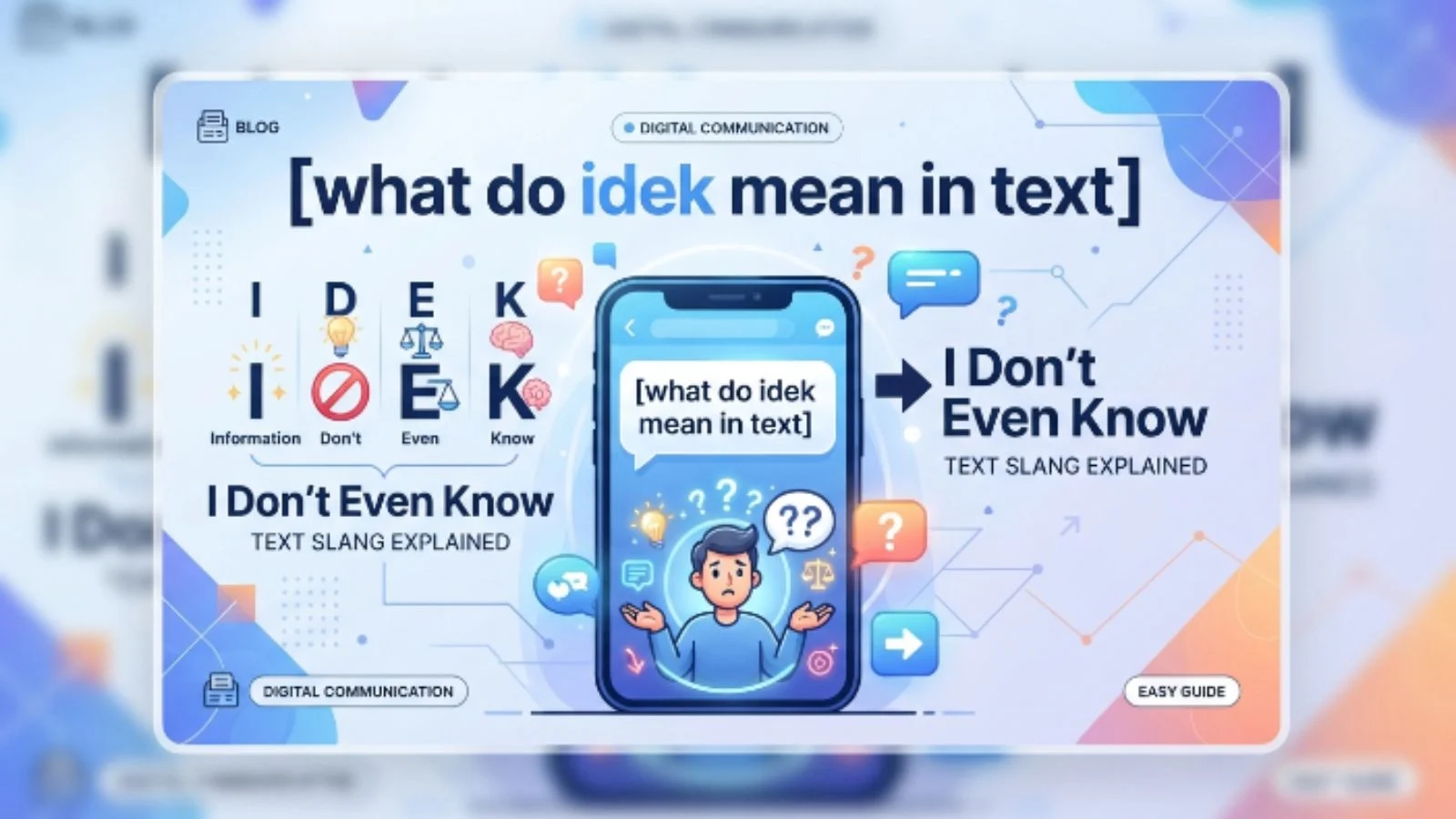
IDEK stands for “I Don’t Even Know.”
It is a popular internet slang expression people use when they:
- Don’t know the answer
- Feel confused
- Are surprised
- Feel frustrated
- Don’t have an explanation for something
Quick Definition
IDEK means “I Don’t Even Know.” It is commonly used in text messages, social media, and online chats to express confusion, uncertainty, or a lack of explanation.
This abbreviation is informal and works best in casual conversations.
Simple Meaning of IDEK
In simple words, IDEK means:
“I have no idea.”
or
“I honestly don’t know.”
The word “even” adds extra emotion. It makes the sentence sound stronger than simply saying “I don’t know.”
Compare these:
- I don’t know. (neutral)
- I don’t even know. (more emotional)
- IDEK. (short, casual, and expressive)
That’s why younger people often prefer using IDEK while texting.
Where Is IDEK Used?
You’ll mostly see IDEK in informal online conversations.
Common places include:
- Text messages
- Snapchat
- Instagram DMs
- Facebook Messenger
- TikTok comments
- X (formerly Twitter)
- Discord
- Online gaming chats
People use it whenever they want to respond quickly without typing the entire phrase.
Why Do People Use IDEK?
There are several reasons why IDEK has become popular.
It Saves Time
Typing four letters is much faster than writing:
“I don’t even know.”
This makes texting quicker.
It Sounds More Natural
Many people already say “I don’t even know” during conversations.
The abbreviation simply reflects everyday speech.
It Shows Emotion
IDEK doesn’t just mean you don’t know something.
It often expresses:
- Confusion
- Shock
- Annoyance
- Frustration
- Being overwhelmed
For example:
Friend: Why is everyone leaving early?
You: IDEK.
This answer sounds more emotional than simply saying “I don’t know.”
It Fits Casual Conversations
Internet slang helps conversations feel relaxed and friendly.
That’s why IDEK is common among teenagers and young adults.
Different Ways IDEK Is Used
The meaning stays the same, but the feeling can change depending on the conversation.
1. Genuine Confusion
Someone asks something you truly don’t know.
Example
Friend: Who ate my sandwich?
You: IDEK.
Explanation:
You honestly have no idea.
2. Feeling Overwhelmed
Sometimes people use IDEK when life feels stressful.
Example
“I have three exams tomorrow and IDEK where to start.”
Explanation:
The speaker feels confused and overwhelmed.
3. Expressing Surprise
Sometimes something is so unexpected that words aren’t enough.
Example
“IDEK how that happened.”
Explanation:
The speaker is shocked.
4. Showing Frustration
People often use IDEK after something annoying happens.
Example
“IDEK why my phone keeps restarting.”
Explanation:
The speaker is frustrated because they can’t explain the problem.
Real-Life Examples of IDEK in Text
Here are some common conversations.
Example 1
Alex: Where’s Sarah?
Emma: IDEK. She stopped replying.
Explanation:
Emma genuinely doesn’t know where Sarah is.
Example 2
Mom: Why is your room so messy?
Son: IDEK.
Explanation:
The son either doesn’t know or doesn’t have a good explanation.
Example 3
Friend: How did your team lose?
You: IDEK. We were winning.
Explanation:
You’re surprised by what happened.
Example 4
“I’ve watched this tutorial five times and IDEK what I’m doing.”
Explanation:
The speaker feels confused and frustrated.
Example 5
Friend: Why is everyone posting that meme?
You: IDEK but it’s everywhere.
Explanation:
You don’t know why the trend became popular.
What Do IDEK Mean in Text on Social Media?
On social media, IDEK often appears in captions and comments.
Examples include:
- “IDEK what I was thinking.”
- “IDEK why this is funny.”
- “IDEK how I passed that test.”
- “IDEK what’s happening anymore.”
People often use it humorously when reacting to unexpected situations.
IDEK vs Similar Texting Terms
Many abbreviations have similar meanings but are used differently.
| Term | Full Meaning | When It’s Used |
|---|---|---|
| IDEK | I Don’t Even Know | Confusion with emotion |
| IDK | I Don’t Know | Simple uncertainty |
| IDC | I Don’t Care | Lack of interest |
| IKR | I Know, Right? | Agreement |
| TBH | To Be Honest | Honest opinion |
| SMH | Shaking My Head | Disappointment or disbelief |
The biggest difference is:
- IDK is neutral.
- IDEK sounds stronger and more emotional.
IDEK vs IDK
People often confuse these two abbreviations.
Here’s the easiest way to remember them.
IDK
Means:
I don’t know.
Example:
“What time does the movie start?”
“IDK.”
This is a simple answer.
IDEK
Means:
I don’t even know.
Example:
“How did the project disappear?”
“IDEK.”
This suggests confusion, frustration, or surprise.
When Should You Use IDEK?
IDEK is perfect for casual conversations.
Use it when:
- You’re texting friends.
- You’re chatting online.
- You’re commenting on social media.
- You’re talking casually with classmates.
- You’re messaging family members informally.
It sounds natural in everyday conversations.
When Should You Avoid IDEK?
Avoid using IDEK in professional settings.
For example:
- Business emails
- Job applications
- School assignments
- Academic writing
- Official reports
- Formal customer support messages
Instead, write:
- “I’m not sure.”
- “I don’t know.”
- “I don’t have that information.”
- “I’m unable to confirm.”
These sound much more professional.
Is IDEK Rude?
Usually, no.
IDEK is generally considered friendly and casual.
However, the tone depends on the conversation.
For example:
Friend:
“Can you explain this homework?”
You:
“IDEK.”
This may sound a little dismissive.
A friendlier response would be:
“IDEK either. Let’s figure it out together.”
Adding extra words makes the conversation warmer.
Common Misunderstandings About IDEK
Many people misunderstand this abbreviation.
Myth 1: IDEK Means “I Don’t Know”
Not exactly.
The correct phrase is:
I Don’t Even Know
The word “even” adds emphasis.
Myth 2: IDEK Is Only for Teenagers
False.
Although younger people use it frequently, adults also use IDEK in casual online conversations.
Myth 3: IDEK Is Always Negative
Not true.
Sometimes it’s simply expressing uncertainty.
Other times it’s used humorously.
Example:
“IDEK why this cat video is so funny.”
Here, the speaker isn’t upset.
Myth 4: IDEK Is Appropriate Everywhere
No.
It’s best reserved for informal conversations.
Professional communication should use complete sentences instead.
Pro Tips for Using IDEK Correctly
Keep these tips in mind.
- Use IDEK only in casual conversations.
- Don’t use it in business emails.
- Know your audience before using internet slang.
- If someone may not understand texting abbreviations, write the full phrase instead.
- Use IDEK naturally rather than forcing it into every conversation.
- Pair it with a complete sentence when clarity matters.
Example:
Instead of:
“IDEK.”
You could say:
“IDEK why the app keeps crashing.”
This provides more context.
Why IDEK Remains Popular
Texting has become faster than ever, and abbreviations help people communicate quickly.
IDEK remains popular because it:
- Saves typing time.
- Sounds conversational.
- Expresses emotion clearly.
- Fits modern online communication.
- Is widely understood across social media platforms.
As internet slang continues to evolve, IDEK remains one of the easiest abbreviations to recognize and use.
Final Thoughts
If you’ve ever wondered what do IDEK mean in text, the answer is simple: IDEK stands for “I Don’t Even Know.” It’s a casual abbreviation used to express confusion, uncertainty, surprise, or frustration in text messages and online conversations.
While it’s perfectly suited for chatting with friends or posting on social media, it’s best to avoid using it in professional or formal communication. Understanding abbreviations like IDEK can make online conversations easier to follow and help you communicate more naturally in today’s digital world.
Frequently Asked Questions
What do IDEK mean in text?
IDEK means “I Don’t Even Know.” It is used to express confusion, uncertainty, surprise, or frustration in casual online conversations.
Is IDEK the same as IDK?
No. IDK means “I Don’t Know,” while IDEK means “I Don’t Even Know.” IDEK adds extra emphasis and emotion.
Can I use IDEK in professional emails?
No. IDEK is informal internet slang and should only be used in casual conversations. For professional communication, write the complete phrase instead.
Is IDEK popular on social media?
Yes. IDEK is widely used on platforms like Instagram, TikTok, Snapchat, WhatsApp, Discord, Reddit, and X, especially in casual chats and comments.