When someone sends you a message that ends with “.”, you may wonder:
What do . mean in text?
Is it normal?
Is it rude?
Is it serious?
In this complete guide, you will learn the clear meaning of the period (.) in texting, its history, tone, personality signals, and modern 2026 usage.
Everything is written in simple English, so even beginners can understand.
Clear Meaning of “.” in Text (Simple Definition)
In simple words, the period (.) is a punctuation mark.
In school writing, it means:
The sentence is finished.
Example:
- I am going home.
- She likes pizza.
But in texting, the meaning can change.
In Text Messages, “.” Can Mean:
- The message is complete.
- The person is serious.
- The tone is cold.
- The person may be upset.
- The person is formal.
- The person is older or professional.
So, the meaning depends on tone and context.
Why Is “.” Different in Texting?
In real life, we hear voice tone.
But in text, we cannot hear voice.
So people use:
- Emojis
- Exclamation marks (!)
- No punctuation
- Extra letters (okayyy)
- Or no period at all
Because of this, a simple “.” can feel stronger than normal.
Example:
- Okay
- Okay.
The second one can feel more serious or cold.
Even though both mean the same word, the tone feels different.
Origin and History of the Period (.)
The period is one of the oldest punctuation marks.
Where Did It Come From?
The period started in Ancient Greece.
A Greek scholar named Aristophanes of Byzantium (around 200 BC) created early punctuation marks to help readers pause while reading.
Later, during the Roman period, punctuation improved.
In the 15th century, printing presses made punctuation more standard.
By the 1700s, the period became common in English writing.
So originally, it only meant:
Stop. The sentence ends.
It had no emotional meaning.
But in texting culture (2000s–2026), people gave it new emotional meanings.
What Does “.” Mean in Different Texting Situations?
Let’s look at different contexts.
1. Neutral Meaning – Just Ending a Sentence
Sometimes, a period is just normal grammar.
Example:
- I will call you tomorrow.
Meaning: The person is simply finishing the sentence correctly.
This is common in:
- Work emails
- School messages
- Professional chats
No hidden emotion.
2. Serious Tone
Example:
- We need to talk.
- This is not okay.
Meaning: The person is serious.
The period makes the sentence feel firm.
3. Cold or Distant Tone
Example:
- Fine.
- Sure.
- Okay.
Meaning: The person may be upset or annoyed.
The period removes warmth.
Compare:
- Okay!
- Okay 😊
- Okay.
The last one feels colder.
4. Passive-Aggressive Feeling
Sometimes, a period shows hidden anger.
Example:
Person A: Are you mad?
Person B: No.
The short reply with a period feels tense.
It can mean:
“I am not happy, but I don’t want to say more.”
5. Mature or Professional Personality
Some people always use correct punctuation.
They are:
- Older
- Professional
- Teachers
- Office workers
For them, the period means nothing emotional.
It is just correct writing.
Real-Life Texting Examples (With Explanations)
Let’s see short dialogues.
Each example includes a simple explanation.
Example 1: Friendly Tone
A: Are you coming?
B: Yes!
Explanation: The exclamation mark shows excitement.
Example 2: Serious Tone
A: Are you coming?
B: Yes.
Explanation: The period makes it feel serious and final.
Example 3: Possible Anger
A: Sorry I forgot.
B: It’s fine.
Explanation: The period may show hidden disappointment.
Example 4: Normal Work Message
Boss: Please send the report.
Employee: I have sent it.
Explanation: The period is professional and correct grammar.
Example 5: Short Cold Reply
A: I miss you.
B: Okay.
Explanation: The period makes the reply feel distant and unemotional.
Table: Meaning of “.” Based on Context
| Situation | Meaning of “.” | Emotional Feeling |
|---|---|---|
| Work email | Normal grammar | Neutral |
| Argument | Serious or upset | Cold |
| Short reply | Annoyed or distant | Negative |
| Long message | Formal ending | Calm |
| Older texter | Habit | Neutral |
This shows that meaning depends on context.
Personality Traits Linked to Using “.”
Texting style shows personality.
Here are possible personality types.
People Who Always Use Periods
They may be:
- Detail-oriented
- Serious
- Professional
- Logical
- Older (30+ age group often)
They care about grammar.
People Who Avoid Periods
They may be:
- Casual
- Friendly
- Younger (Gen Z, Gen Alpha)
- Emotional
- Expressive
They prefer:
- No punctuation
- Emojis
- Short replies
Generational Differences (Updated for 2026)
Research and social trends show differences.
Millennials (Born 1981–1996)
- Use periods often.
- Grew up with email.
- See punctuation as normal.
Gen Z (Born 1997–2012)
- Often avoid periods in short texts.
- Think periods feel “too serious.”
- Prefer casual tone.
Example:
- ok (casual)
- ok. (serious or angry)
Gen Alpha (Born 2013+)
- Use voice notes more.
- Use short texts.
- Rarely use full punctuation in casual chat.
In 2026, short informal texts are more common than full sentences.
Common Mistakes About “.” in Text
Many people misunderstand the period.
Let’s correct common myths.
Mistake 1: A Period Always Means Anger
Wrong.
Sometimes it is just grammar.
Context matters.
Mistake 2: Only Older People Use Periods
Not true.
Many young professionals use proper punctuation at work.
Mistake 3: No Period Means Friendly
Not always.
Some people just type fast.
Mistake 4: One Word + Period Is Always Rude
Example:
- Thanks.
- Fine.
- Sure.
These can feel rude, but not always.
You must read the full conversation.
How to Know the Real Meaning
Ask yourself:
- Who sent the message?
- What is your relationship?
- Were you arguing?
- Is this work or casual chat?
- Do they normally use punctuation?
If the person always uses periods, then it is normal.
If they never use periods and suddenly do, it may signal seriousness.
Modern 2026 Texting Trends
Text communication keeps changing.
Here are current trends:
1. Minimal Texting
Many people now type:
- ok
- sure
- yeah
Without punctuation.
2. Emotional Markers
Instead of periods, people use:
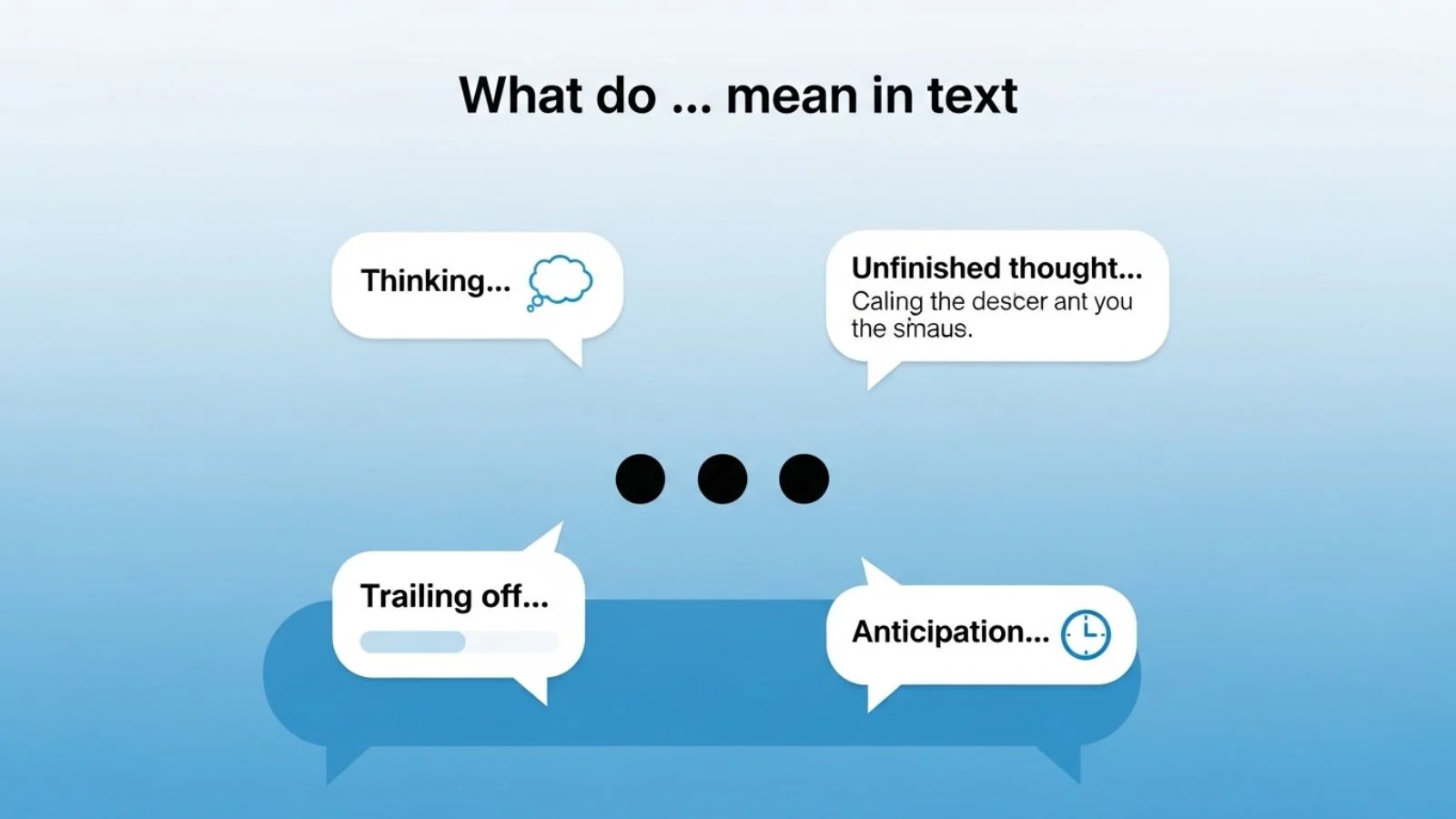
- …
- !!
- lowercase writing
- emojis
3. The Single Period Message
Sometimes, someone sends only:
.
This can mean:
- I am annoyed.
- Conversation is over.
- I have nothing to say.
It feels stronger than words.
4. AI and Professional Messaging
In 2026, many people use AI tools to help write messages.
AI usually adds correct punctuation.
So a period may simply mean the message was written formally.
When Should You Use “.” in Text?
Use it when:
- Writing professional emails
- Talking to teachers
- Messaging your boss
- Sending formal invitations
- Writing long explanations
Avoid it when:
- Sending short friendly replies
- Casual chat with close friends
- Quick texting
But remember: There is no strict rule.
Comparison: Period vs No Period
Example 1:
- I understand
Feels open and friendly. - I understand.
Feels complete and final.
Example 2:
- That’s fine
Soft tone. - That’s fine.
Firm tone.
Example 3:
- Sure!
Happy. - Sure
Neutral. - Sure.
Possibly cold.
Each punctuation mark changes tone.
Does “.” Change Meaning in Social Media?
Yes.
On platforms like:
- Instagram DMs
- Snapchat
- TikTok comments
Short replies without punctuation feel more natural.
On platforms like:
- Work Slack
Periods are expected.
Emotional Impact of “.”
Psychology studies show that people read emotion into punctuation.
Because texting has no voice, small details feel bigger.
A period can signal:
- Finality
- Distance
- Control
- Confidence
- Authority
But it can also mean:
- Calmness
- Clarity
- Structure
So it is not always negative.
Is It Rude to Use “.”?
Short answer: No.
Long answer: It depends on context.
If you reply:
“Okay.”
After someone shares feelings, it may seem cold.
But in a work message, it is normal.
Tone matters more than punctuation.
Frequently Asked Questions
1. What do . mean in text from a girl?
It usually means the sentence is finished.
If it is a short reply like “Fine.” it may show seriousness or mild annoyance. Context is important.
2. Is using a period in text aggressive?
Not always.
It can feel aggressive in short replies, but in formal messages it is normal grammar.
3. Why does “okay.” feel different from “okay”?
Because the period adds finality.
It feels more closed and less emotional.
4. What does it mean if someone sends just “.”?
It often shows annoyance, silence, or that the conversation is over.
It is usually not positive.
5. Should I stop using periods in text?
No.
Use them in professional writing.
In casual chat, you can choose your style.
6. Why do younger people avoid periods?
Many Gen Z and Gen Alpha users feel periods make messages too serious.
They prefer relaxed, natural typing.
7. Can punctuation change relationships?
Yes, small tone changes can affect feelings.
Clear communication is more important than punctuation style.
Quick Summary Points
- The period (.) ends a sentence.
- In texting, it can change tone.
- It may feel serious or cold in short replies.
- Context always matters.
- Professional messages require punctuation.
- Casual chats often skip periods.
- Generations use punctuation differently.
Conclusion
So, what do . mean in text?
At its core, the period simply means a sentence is finished. But in modern texting, especially in 2026, it can also signal seriousness, distance, professionalism, or emotional tone. The meaning depends on context, relationship, and texting style. A short reply with a period may feel cold, while a full sentence in work communication feels normal and correct. The best rule is simple: understand the situation before judging the tone. If you are unsure, ask kindly. Clear communication always matters more than punctuation style.