Have you ever received a message that simply said “DGAF” and wondered what it actually meant? You’re not alone. Internet slang changes quickly, and new abbreviations appear on social media, in text messages, and online games every day.
The phrase DGAF is one of those expressions that can sound confusing if you’ve never seen it before. Some people use it jokingly, while others use it to express strong emotions or confidence.
In this guide, you’ll learn what DGAF means in text, where it came from, how people use it, when it’s appropriate, and when you should avoid using it. By the end, you’ll understand exactly what someone means when they type DGAF.
What Does DGAF Mean in Text?
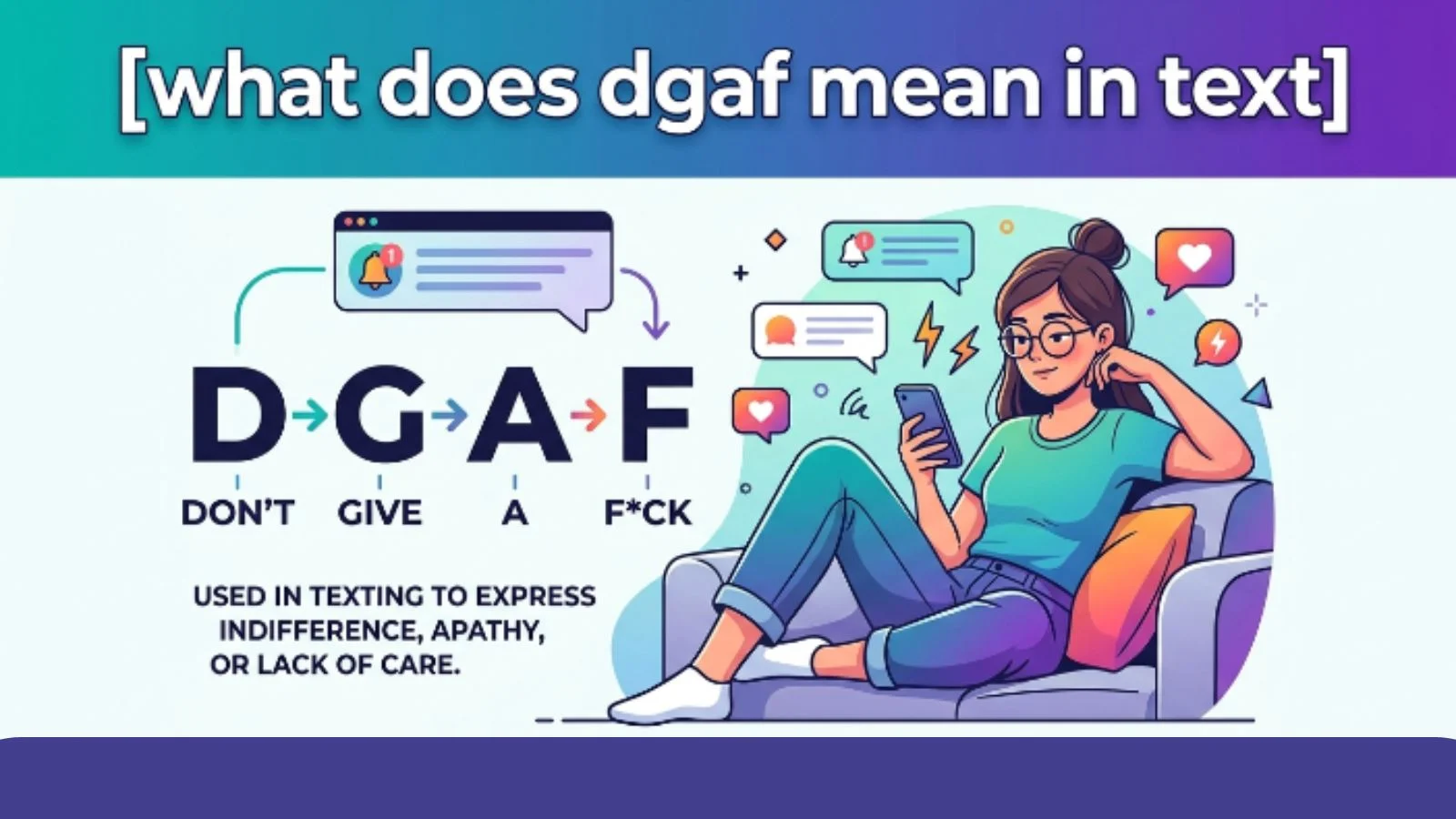
DGAF stands for “Don’t Give a F*.”**
It is a slang abbreviation used to show that someone doesn’t care about something, isn’t worried about other people’s opinions, or refuses to let something affect them.
Featured Snippet Definition
DGAF means “Don’t Give a F*.” In texting and online conversations, it expresses that someone does not care about a situation, opinion, criticism, or outcome. Depending on the context, it can sound confident, humorous, rebellious, or sometimes rude.**
Simple Meaning of DGAF
In simple words, DGAF means “I don’t care.”
However, it’s usually much stronger than simply saying “I don’t care.”
People use it when they want to show that they have completely stopped worrying about something.
For example:
- “At this point, I DGAF what people think.”
- “He DGAF about the negative comments.”
In both examples, the speaker is saying they are no longer concerned with other people’s opinions.
What Does DGAF Really Express?
Depending on the conversation, DGAF can express different emotions.
It may show:
- Confidence
- Independence
- Frustration
- Rebellion
- Emotional exhaustion
- Fearlessness
- Humor
- Defiance
Because the abbreviation contains profanity, its tone is usually much stronger than everyday expressions.
Where Is DGAF Used?
You’ll often see DGAF on many online platforms.
Text Messages
Friends often use it while chatting casually.
Example:
Friend 1: Everyone keeps criticizing my haircut.
Friend 2: Just DGAF. It’s your style.
Here, the advice means not to worry about other people’s opinions.
Social Media
People use DGAF in captions, comments, tweets, and replies.
Examples include:
- “Living my life and DGAF.”
- “DGAF energy all year.”
- “Finally learned to DGAF.”
These captions usually suggest confidence and self-acceptance.
Online Gaming
Gamers sometimes use DGAF after losing or making risky moves.
Example:
“I rushed anyway because I DGAF.”
This means they weren’t worried about the consequences.
Group Chats
Friends may use it while joking around.
Example:
“We’re ordering pizza again because we DGAF.”
The tone here is playful rather than serious.
Online Forums
People discussing controversial topics may use DGAF to show they don’t care if others disagree.
Why Do People Use DGAF?
There are several reasons why this abbreviation has become popular.
1. It Saves Time
Typing DGAF is much faster than writing the entire phrase.
2. It Shows Strong Emotion
The abbreviation carries more emotional weight than simply saying “I don’t care.”
3. It Sounds Casual
Many internet users prefer abbreviations because they make conversations quicker and more relaxed.
4. It Creates a Confident Tone
Sometimes people use DGAF to show confidence and independence.
Example:
“I finally stopped trying to please everyone. DGAF.”
5. It Can Be Funny
Friends often exaggerate situations using DGAF for humor.
Example:
“I ate the last slice. DGAF.”
Real-Life Examples of DGAF
Let’s look at common situations where people use this slang.
Example 1
Alex: People keep making fun of my shoes.
Jordan: DGAF. Wear what makes you happy.
Explanation:
Jordan is encouraging Alex to ignore criticism.
Example 2
“I DGAF about the rumors anymore.”
Explanation:
The speaker has stopped caring about gossip.
Example 3
“My grades are good, so I DGAF what strangers say online.”
Explanation:
The speaker values their own achievements more than online opinions.
Example 4
“She DGAF about fashion trends.”
Explanation:
She chooses her own style instead of following trends.
Example 5
“We missed the movie, but honestly DGAF.”
Explanation:
The group isn’t upset about missing it.
Example 6
“He acts like he DGAF, but deep down he probably cares.”
Explanation:
Sometimes people pretend not to care even when they actually do.
DGAF vs Similar Terms
| Term | Meaning | Strength | Tone |
|---|---|---|---|
| DGAF | Don’t Give a F*** | Very strong | Casual, bold, sometimes rude |
| IDC | I Don’t Care | Moderate | Neutral |
| IDGAF | I Don’t Give a F*** | Very strong | Similar to DGAF |
| Whatever | Not interested | Mild | Casual |
| No worries | It’s okay | Gentle | Friendly |
The biggest difference is that DGAF contains implied profanity, making it much stronger than alternatives like IDC.
DGAF vs IDGAF
Many people also ask about the difference between these two abbreviations.
| DGAF | IDGAF |
|---|---|
| Means “Don’t Give a F***.” | Means “I Don’t Give a F***.” |
| General expression | Personal statement |
| Can describe anyone | Usually refers to yourself |
Example:
- “She DGAF about criticism.”
- “IDGAF what they think.”
The meanings are nearly identical.
When Should You Use DGAF?
DGAF is best used only in casual conversations.
Good situations include:
- Talking with close friends
- Casual texting
- Social media captions
- Informal online discussions
- Funny conversations
In these situations, people generally understand the slang.
When Should You Avoid Using DGAF?
Since the phrase contains profanity, it isn’t appropriate everywhere.
Avoid using DGAF in:
- Job applications
- Business emails
- School assignments
- Professional meetings
- Messages to teachers
- Formal presentations
- Customer service conversations
- Conversations with people who may find profanity offensive
Replacing it with “I don’t care,” “I’m not concerned,” or “It doesn’t bother me” is usually a better choice in professional settings.
Is DGAF Offensive?
It can be.
Although many people use it casually, it still represents a profanity.
Some readers may see it as:
- Rude
- Aggressive
- Disrespectful
Others simply view it as modern internet slang.
The reaction depends on your audience and the situation.
Is DGAF Positive or Negative?
Interestingly, it can be both.
Positive Meaning
Sometimes it encourages confidence.
Example:
“I’ve learned to DGAF about toxic opinions.”
This suggests healthy self-confidence.
Negative Meaning
Other times it may imply irresponsibility.
Example:
“He DGAF about the rules.”
This suggests careless behavior.
Context always matters.
Common Misunderstandings About DGAF
Many people misunderstand this abbreviation.
It Doesn’t Always Mean Someone Is Angry
People often use DGAF humorously or casually.
It Doesn’t Mean Someone Hates Everything
Usually, they only don’t care about one specific issue.
It Isn’t Appropriate Everywhere
Just because it’s common online doesn’t mean it’s suitable in professional settings.
Confidence Isn’t the Same as Rudeness
Sometimes DGAF reflects healthy confidence.
Other times it simply sounds disrespectful.
The tone depends on how it’s used.
Pro Tips for Using DGAF
Keep these tips in mind before using the abbreviation.
- Know your audience before sending it.
- Avoid using it with people you don’t know well.
- Never use it in professional communication.
- Consider using IDC if you want a softer tone.
- Remember that context changes the meaning.
- Use it sparingly so it doesn’t sound overly aggressive.
- If you’re unsure whether someone may be offended, choose more polite wording.
Why Has DGAF Become So Popular?
Internet culture values short, expressive language.
DGAF became popular because it:
- Is easy to type.
- Expresses strong emotions quickly.
- Fits social media character limits.
- Sounds confident and memorable.
- Has been used in memes, online communities, and pop culture for years.
Its popularity continues because it instantly communicates a bold attitude with just four letters.
Final Thoughts
If you’ve been wondering what does DGAF mean in text, the answer is straightforward. DGAF stands for “Don’t Give a F*,”** and it’s used to express that someone doesn’t care about a situation, criticism, or outcome.
While it’s extremely common in texting, social media, gaming, and casual conversations, remember that it includes profanity. Because of that, it’s best reserved for informal settings with people who are comfortable with this type of language.
Understanding internet slang like DGAF helps you communicate more naturally online and avoid confusion when reading messages. As with any slang term, the key is knowing your audience and choosing the right expression for the situation.
Frequently Asked Questions
What does DGAF mean in texting?
DGAF means “Don’t Give a F*.”** It expresses that someone doesn’t care about something or isn’t concerned about other people’s opinions.
Is DGAF a bad word?
The abbreviation itself hides profanity, so many people consider it offensive or inappropriate in formal situations.
What’s the difference between DGAF and IDC?
IDC simply means “I Don’t Care,” while DGAF expresses the same idea much more strongly because it contains implied profanity.
Can I use DGAF at work?
No. It’s best to avoid DGAF in workplaces, business emails, academic writing, and other professional environments because it may appear disrespectful.
Is DGAF commonly used on social media?
Yes. It’s widely used on platforms like Instagram, TikTok, X, Facebook, Reddit, and in text messages to express confidence, indifference, or humor.