You’re scrolling through messages, emails, or even social media, and suddenly you see it: FYI.
It shows up in work chats, group messages, or even casual texts from friends. At first, it feels important… but you pause and wonder:
What does FYI actually mean in text?
Is it formal? Is it rude? Should you reply to it or ignore it?
Don’t worry—you’re not alone. Many people see “FYI” every day but don’t fully understand how to use it correctly. In this guide, you’ll learn everything in a simple, clear, and practical way.
What Does FYI Mean in Text?
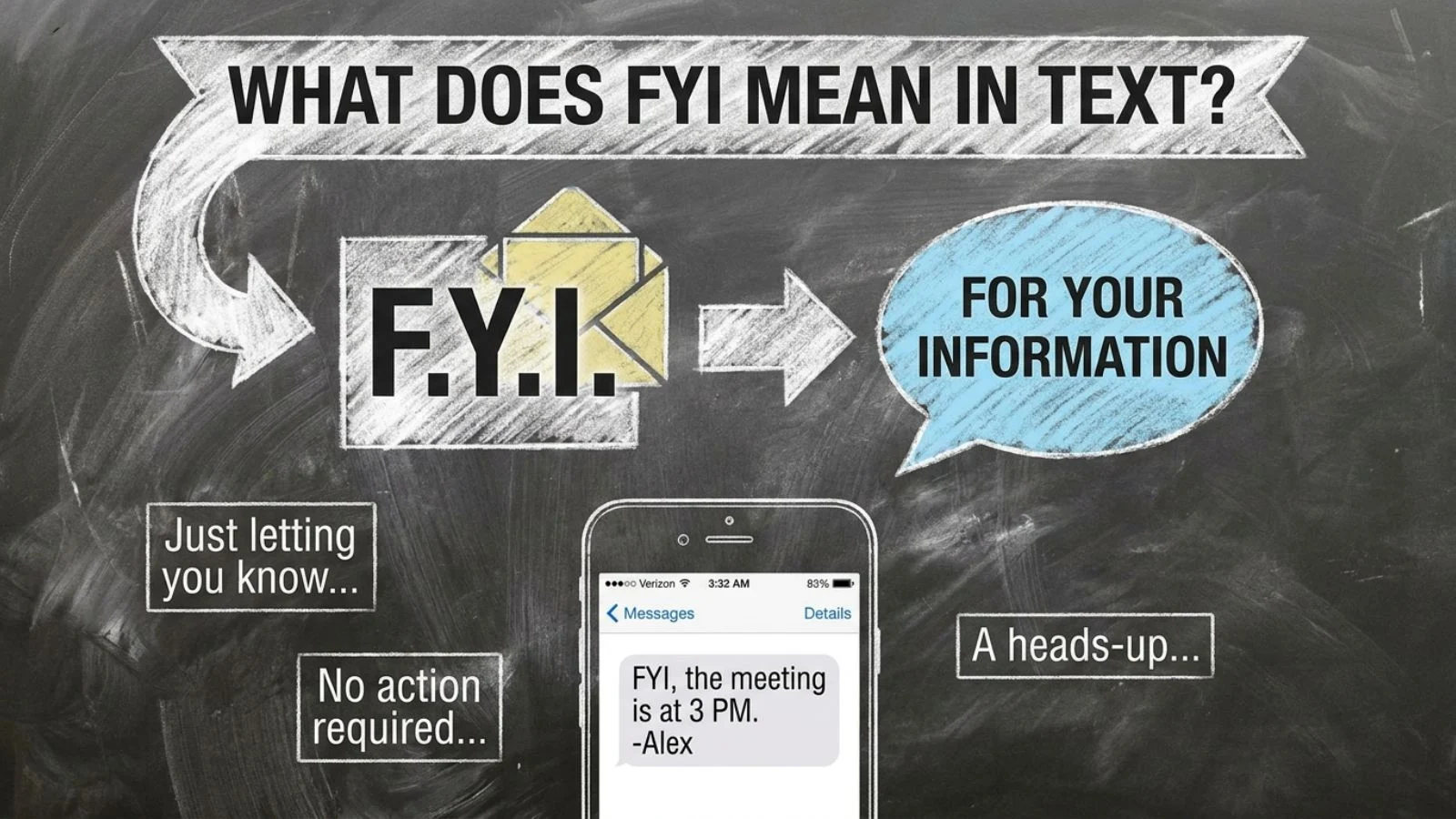
FYI stands for “For Your Information.”
It is used when someone wants to share information with you that may be useful, important, or relevant—but not necessarily requiring a reply.
In simple terms:
FYI means: “Just so you know.”
It is commonly used in texting, emails, workplace communication, and online chats.
Simple Meaning of FYI (Explained Like You’re 10 Years Old)
If we break it down in the easiest way possible:
- Someone is telling you something
- They are not asking you to do anything
- They just want you to know it
Example idea:
“FYI, the meeting is moved to 3 PM.”
This simply means:
“Just so you know, the meeting time has changed.”
No action needed—just information.
Where Is FYI Used?
FYI is used in many different places. Let’s look at the most common ones:
1. Workplace Emails and Messages
This is the most common use.
Example:
“FYI, the report deadline has been extended.”
2. Text Messages
Friends or family might use it casually.
Example:
“FYI, I already ate dinner.”
3. Social Media
People use it when sharing updates or information.
Example:
“FYI, this shop is closed today.”
4. Group Chats
Used to inform multiple people at once.
Example:
“FYI, tomorrow’s class is cancelled.”
Why Do People Use FYI?
People use FYI for a few simple reasons:
1. To Share Information Quickly
It saves time instead of writing long explanations.
2. To Sound Clear and Professional
In workplaces, FYI keeps communication clean and formal.
3. To Avoid Confusion
It signals that the message is for awareness, not action.
4. To Keep Messages Short
Instead of writing a full paragraph, you just say FYI + message.
Real-Life Examples of FYI in Text
Let’s understand how FYI works in real situations:
Example 1: Workplace
“FYI, the boss will join the meeting late today.”
Meaning: Just informing you, no need to respond.
Example 2: Friend Chat
“FYI, I’m bringing snacks to the movie.”
Meaning: Your friend is letting you know, not asking permission.
Example 3: School or College
“FYI, the exam schedule is updated on the notice board.”
Meaning: You should check it, but no action is required in the message.
Example 4: Family Message
“FYI, your uncle is visiting tomorrow.”
Meaning: Important information for awareness.
FYI vs Similar Terms (Easy Comparison)
Many people confuse FYI with other abbreviations. Here’s a simple comparison:
| Term | Full Form | Meaning | Usage |
|---|---|---|---|
| FYI | For Your Information | Just informing you | Formal or casual information |
| BTW | By The Way | Adding extra info | Casual conversations |
| ASAP | As Soon As Possible | Do it quickly | Urgent action needed |
| Heads up | Informing in advance | Warning or notice | Casual or professional |
Key Difference
- FYI = Information only
- ASAP = Action required urgently
- BTW = Extra side comment
- Heads up = Warning or advance notice
When Should You Use FYI?
You should use FYI when:
- You are sharing useful information
- No action is required from the other person
- You want to keep communication short
- You are writing professional messages or emails
- You are updating someone about a situation
Example:
“FYI, the office will be closed on Monday.”
Common Misunderstandings About FYI
Many people misunderstand FYI, so let’s clear things up:
1. FYI is not rude
Some think it sounds cold, but it’s actually neutral.
2. FYI does not demand a reply
You don’t always need to respond.
3. FYI is not always formal
It can be used in both casual and professional chats.
4. FYI is not a command
It’s only information, not an instruction.
Pro Tips for Using FYI Correctly
Here are some useful tips to use FYI like a pro:
1. Don’t overuse it
If every message starts with FYI, it can feel repetitive.
2. Use it when clarity is needed
It helps avoid confusion in group chats.
3. Avoid using it in emotional messages
FYI is neutral and may sound cold in emotional situations.
4. Combine it with clear information
Example:
“FYI, the meeting is at 2 PM in Room 5.”
Is FYI Polite or Rude?
FYI is generally neutral.
It depends on how you use it:
- Polite: “FYI, your parcel has arrived.”
- Slightly cold: “FYI, I already told you.”
Tone matters more than the abbreviation itself.
Why FYI Is So Popular in Texting
FYI is popular because:
- It is short and easy to type
- It saves time
- It works in both formal and informal communication
- Everyone understands it globally
- It keeps messages clean and direct
In today’s fast digital world, short communication like FYI is very useful.
Final Thoughts
Now you know exactly what FYI means in text.
It simply stands for “For Your Information”, and it is used to share useful details without expecting a response. Whether in work emails, group chats, or casual texting, FYI helps you communicate clearly and quickly.
The next time someone texts you “FYI,” you won’t be confused—you’ll know it’s just information meant for you.
FAQ About FYI Meaning in Text
1. What does FYI mean in simple words?
FYI means “For Your Information,” which is used to share information without expecting a reply.
2. Is FYI rude in text messages?
No, FYI is not rude. It is neutral, but tone and context can affect how it feels.
3. Do I need to reply to FYI messages?
Usually, no reply is needed unless the sender asks a question or needs confirmation.
4. Can FYI be used in formal emails?
Yes, FYI is commonly used in professional and formal communication.