Have you ever been in the middle of a fast-paced text conversation, opened a message, and found yourself staring at a random string of capital letters? It happens all the time. Internet slang moves at lightning speed, and if you are not keeping up, a single text can leave you feeling completely left out of the loop.
One abbreviation that has taken over text messages, social media comments, and group chats is IDGAF.
If someone just dropped this in your chat, it can feel a little jarring. Is it an insult? Are they mad at you? Or are they just being casual? Let’s break down exactly what this acronym stands for, how people use it, and how you should respond so you never feel out of the loop again.
What Does IDGAF Mean in Text?
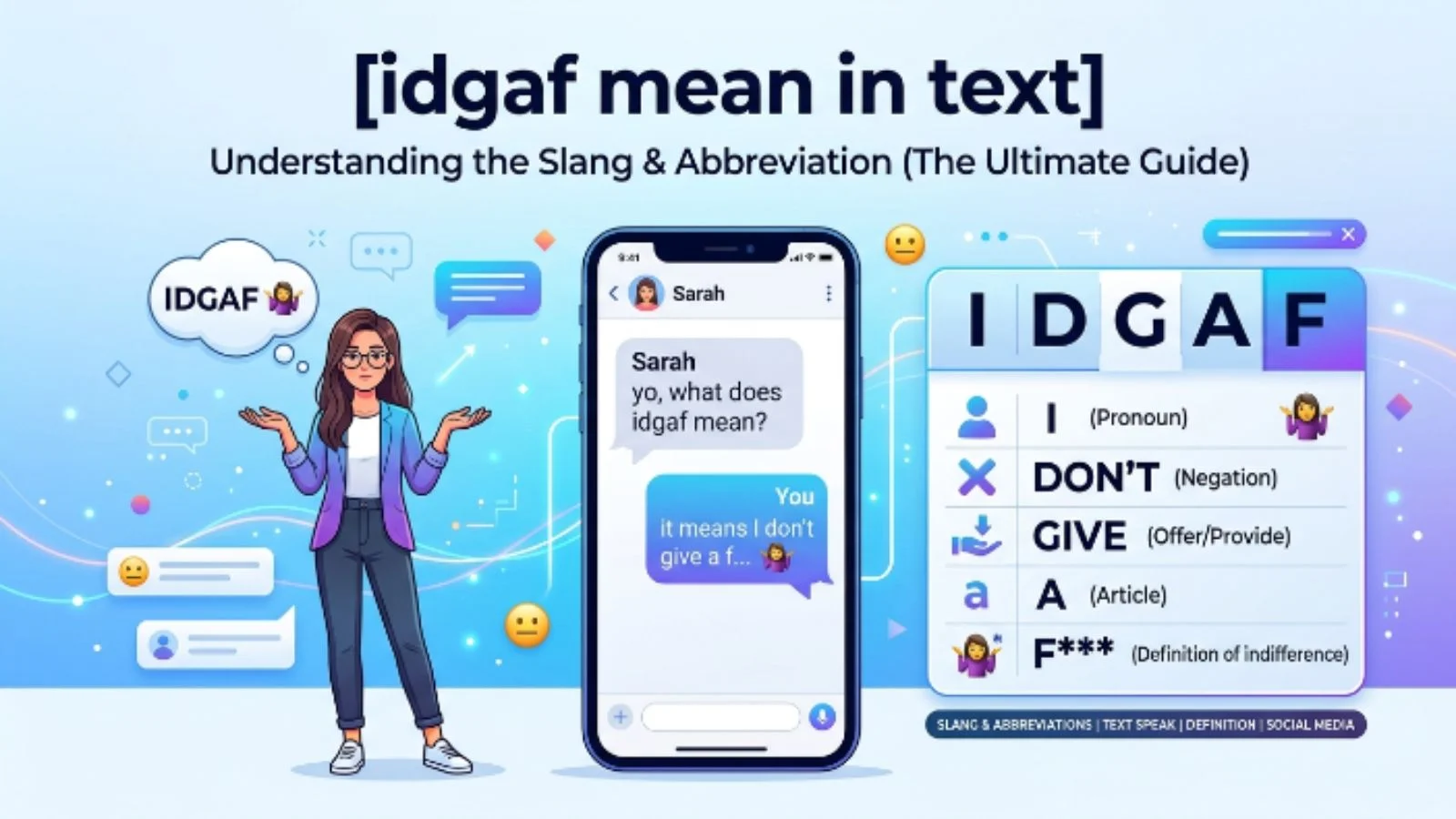
If you are looking for a quick, direct definition, here is the bottom line: IDGAF stands for “I don’t give a f*.”
In everyday conversation, it is the ultimate digital shrug. It is a blunt, shorthand way of saying that you do not care about a specific topic, situation, or opinion.
Because the phrase contains a curse word, it carries a lot of weight. It is naturally aggressive, highly informal, and designed to cut straight to the point. When someone types these five letters, they are drawing a hard line in the sand to show complete and utter indifference.
The Simple Meaning Behind the Slang
To understand the simple meaning of IDGAF, think of it as the modern, digital version of saying, “Whatever,” “I couldn’t care less,” or “It doesn’t matter to me.”
However, because it uses intense language, it is much more passionate than a standard “I don’t care.” It implies that the person speaking has reached a point of total exhaustion or absolute certainty about their lack of interest. They are not just indifferent; they are aggressively indifferent.
Where Is It Used Most Often?
You will find IDGAF across almost every digital platform where people communicate informally. It thrives in environments where speed and brevity are valued over formal grammar.
- Text Messaging and Group Chats: This is the most common home for the acronym. Friends use it to make quick decisions or express frustration about shared situations.
- TikTok and Reels: Users frequently type it in video captions, text overlays, or comment sections to dismiss drama, critics, or unsolicited advice.
- X (formerly Twitter): Because of the platform’s emphasis on short, punchy thoughts, IDGAF is a favorite tool for users giving their unfiltered opinions on pop culture, sports, or politics.
- Gaming Lobbies: Players use it during live text chats to tell teammates or opponents that they are not bothered by trash talk or losing a match.
Why Do People Use It?
There are a few major reasons why this acronym has become a staple of modern digital communication.
1. Saving Time and Effort
Typing out a full sentence takes time. In a fast-moving text thread, dropping five letters gets the point across in less than a second. It keeps the momentum of the conversation moving.
2. Matching the Tone of Internet Culture
Modern digital communication leans heavily on a casual, unfiltered aesthetic. Using raw slang makes a person sound authentic, relatable, and deeply embedded in current internet trends.
3. Creating an Attitude or Vibe
Sometimes, saying “I don’t care” sounds too soft or polite. If someone wants to project an image of confidence, independence, or rebellion, IDGAF delivers that exact energy. It signals that the speaker is totally unbothered by outside opinions.
Real-Life Examples and Breakdowns
To truly understand how this slang functions in daily life, it helps to see it in context. Here are three common scenarios where you might see it pop up.
Scenario A: Making Group Decisions
- Person A: Do you want to get tacos or burgers tonight? I honestly can’t decide.
- Person B: IDGAF, both sound amazing right now. Just pick one and I am there.
Why it works: In this case, the slang isn’t angry at all. Person B is using it in a friendly, casual way to say they are genuinely happy with either food choice.
Scenario B: Handling Gossip or Drama
- Person A: Did you hear what Sarah said about your new shoes? She thought they looked weird.
- Person B: IDGAF what Sarah thinks about my style. I love them.
Why it works: Here, the acronym serves as a shield. Person B uses it to show confidence and prove that someone else’s negative opinion has zero power over their happiness.
Scenario C: Venting About General Frustrations
- Person A: The boss is saying we might have to stay ten minutes late on Friday to clean up.
- Person B: Look, IDGAF anymore, I am walking out the door exactly at 5:00 PM.
Why it works: This is a classic expression of exhaustion. Person B is using the slang to show they have reached their limit with work stress and are drawing a firm boundary.
IDGAF vs. Similar Internet Acronyms
The internet loves short expressions of indifference, but each one has a slightly different flavor. Let’s look at how IDGAF stacks up against its closest cousins.
| Acronym | What It Stands For | Tone and Intensity | Best Used For |
| IDGAF | I don’t give a f*** | High Intensity / Aggressive | Showing absolute indifference or defiance. |
| IDC | I don’t care | Low Intensity / Neutral | Simple decision-making or mild disinterest. |
| IDTS | I don’t think so | Low Intensity / Polite | Expressing soft disagreement without tension. |
| IDCMM | It don’t count making money | Medium Intensity / Hustle | Focusing purely on personal success and goals. |
| IDK | I don’t know | Low Intensity / Neutral | Expressing a genuine lack of information. |
When Should You Use It?
Because of the explicit nature of the underlying phrase, you need to be intentional about when you pull this acronym out of your digital toolkit.
It is perfectly fine to use when:
- You are chatting with close friends who understand your humor and personality.
- You are trying to emphasize that you genuinely have no preference between two fun options.
- You want to show that you are strong enough to ignore haters or online trolls.
You should absolutely avoid it when:
- You are sending an email to a boss, professor, or client.
- You are speaking to family members who might find explicit language offensive.
- You are dealing with a sensitive or serious emotional situation where someone is looking for empathy.
Common Misunderstandings About the Term
The biggest risk with IDGAF is text misinterpretation. Because text messages lack facial expressions and vocal tone, it is incredibly easy for the recipient to read too much into those five letters.
1. Assuming the Sender is Furious
If a friend texts you this acronym, do not immediately assume they are angry with you. Look at the surrounding context. Often, they are simply trying to say “I don’t mind” or “Choose whatever you want,” but they are using colorful language to say it.
2. Misreading it as a Personal Attack
When someone says “IDGAF about that situation,” they are rejecting the topic, not you. It is important to separate a person’s lack of interest in a subject from their feelings about your friendship.
Pro Tips for Navigating Slang in Conversation
If you want to use internet slang like a seasoned pro without causing awkward social friction, keep these three guidelines in mind.
- Assess your relationship first: Never use explicit acronyms with someone you haven’t established a comfortable, casual relationship with yet.
- Balance with context clues: If you are worried that your use of the phrase might sound too harsh, add a follow-up sentence to soften the blow. For example: “IDGAF what we watch tonight, honestly! You pick, I’m just happy to hang out.”
- Read the room: If the conversation is heavy, stressful, or professional, stick to standard, clear English. Save the internet shorthand for the relaxed, late-night group chat.
Final Thoughts
At the end of the day, language is constantly evolving to match the speed of our thumbs. IDGAF is simply a tool of efficiency, designed to convey absolute indifference in a fraction of a second.
Now that you know exactly what it stands for, where it lives, and how to decode its various tones, you never have to scratch your head when it pops up on your screen. Use it wisely, read the context carefully, and keep your text game strong.
Frequently Asked Questions
Is IDGAF considered rude?
Yes, it can be viewed as highly rude or unprofessional depending on the audience. Because it stands for a phrase containing a curse word, it should never be used in professional, academic, or formal settings. However, among close friends, it is often seen as completely casual.
What is a polite alternative to IDGAF?
If you want to express the same feeling without the harsh language, you can use acronyms like IDC (I don’t care) or WTV (Whatever). In a professional setting, stick to phrases like “I have no preference,” “Either option works well for me,” or “I am comfortable deferring to your judgment.”
How do you reply when someone texts you IDGAF?
Your reply depends entirely on the context of the conversation. If a friend says it casually about choosing a restaurant, you can simply reply with your choice (e.g., “Cool, let’s do tacos then!”). If someone uses it angrily during a disagreement, it might be a sign to step away from the text thread and finish the conversation over the phone or in person to avoid further miscommunication.