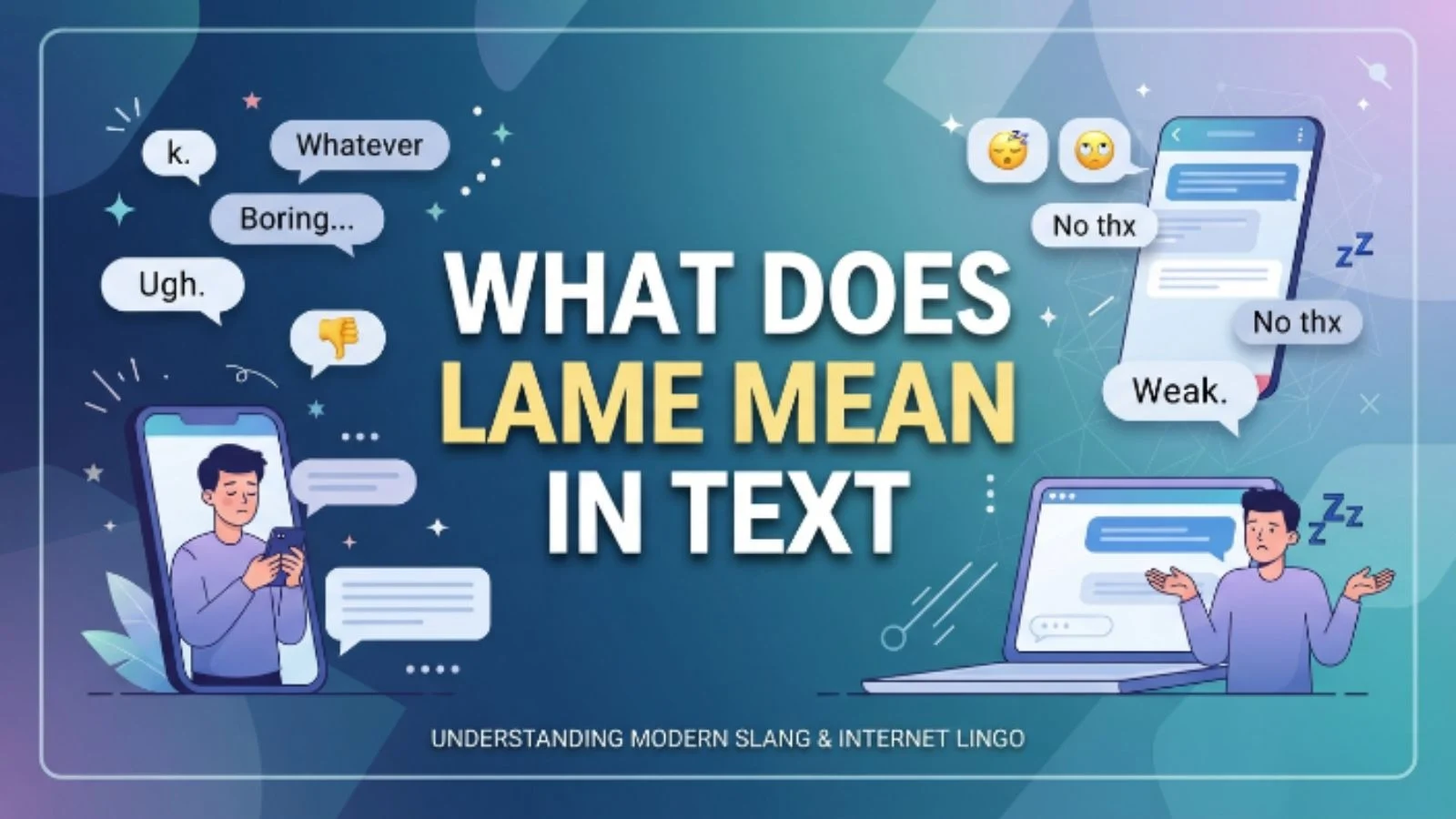
If you’ve received a message saying, “That’s lame,” you may wonder what the sender really means. In texting and online conversations, lame is a common slang word used to describe something as boring, disappointing, uncool, or unimpressive. Depending on the situation, it can be playful, sarcastic, or even slightly insulting.
The meaning usually depends on the tone of the conversation and the relationship between the people chatting. In this guide, you’ll learn exactly what “lame” means in text, where it’s used, when to use it, and how to avoid common misunderstandings.
What Does Lame Mean in Text?
Featured Snippet Definition:
Lame in text means boring, uncool, disappointing, or not impressive. People use it to express that they dislike an idea, event, excuse, joke, or action. The word is usually informal and is commonly seen in text messages, social media posts, online gaming, and everyday conversations.
For example:
Friend: “The party got canceled.”
You: “That’s so lame.”
Here, lame means the situation is disappointing.
Simple Meaning
In everyday English, lame simply means something isn’t exciting, interesting, or enjoyable.
People often use it when they feel something:
- Is boring
- Didn’t meet expectations
- Seems uncool
- Is disappointing
- Isn’t worth getting excited about
Sometimes the word is directed at a person’s behavior instead of an event.
For example:
- “That excuse is lame.”
- “His joke was lame.”
In these examples, the speaker thinks the excuse or joke wasn’t very good.
Where Is It Used?
You’ll see lame in many different types of conversations.
Text Messages
Friends often use it casually when talking about plans or daily life.
Example:
“I have homework all weekend.”
“That’s lame.”
Social Media
People use it in comments, captions, and replies to express disappointment or criticism.
Example:
“Another delayed update? Lame.”
Online Gaming
Gamers sometimes call unfair tactics, boring gameplay, or poor sportsmanship “lame.”
Example:
“Camping the whole match is lame.”
Online Communities
Forums and group chats frequently use the word when discussing unpopular opinions, bad decisions, or disappointing news.
Real-Life Conversations
“Lame” has been part of everyday spoken English for decades. It’s just as common in face-to-face conversations as it is online.
Example:
“The movie wasn’t scary at all. It was kind of lame.”
Why Do People Use It?
People use lame because it’s a quick and simple way to express disappointment or disapproval.
Some common reasons include:
- To say something is boring
- To react to bad news
- To criticize an excuse
- To tease friends jokingly
- To express frustration
- To describe something as uncool
The word is informal, so it’s mostly used among friends, classmates, teammates, or people who know each other well.
Real-Life Examples
Here are some common examples you’ll see in texting and online conversations.
Example 1
Alex: “Our trip got canceled.”
Jordan: “That’s lame.”
Meaning: Jordan thinks the canceled trip is disappointing.
Example 2
Chris: “I can’t come because I have to clean my room.”
Taylor: “Lame excuse.”
Meaning: Taylor doesn’t believe the excuse is very convincing.
Example 3
Friend: “The concert sold out.”
You: “That’s so lame.”
Meaning: You’re disappointed that tickets are unavailable.
Example 4
Player 1: “He quit the match after losing one round.”
Player 2: “That’s lame.”
Meaning: The player thinks quitting early was poor behavior.
Example 5
Sam: “The movie ended after only an hour.”
Mia: “Seriously? That’s lame.”
Meaning: Mia expected something better.
Example 6
Friend: “School starts next week.”
You: “Lame.”
Meaning: You’re unhappy that vacation is ending.
Example 7
Coworker: “The meeting got extended another hour.”
You: “That’s pretty lame.”
Meaning: You think the situation is annoying and disappointing.
Example 8
Friend: “Nobody showed up.”
You: “Wow, that’s lame.”
Meaning: You feel sorry because the event didn’t go as planned.
Lame vs Similar Terms
Although lame has a similar meaning to several slang words, each one has a slightly different tone.
| Term | Meaning | Tone | Example |
|---|---|---|---|
| Lame | Boring or disappointing | Mild | “That game was lame.” |
| Boring | Not interesting | Neutral | “The lecture was boring.” |
| Weak | Not impressive | Casual slang | “That excuse was weak.” |
| Cringe | Embarrassing or awkward | Internet slang | “That video was cringe.” |
| Trash | Very bad quality | Strong criticism | “That update is trash.” |
| Mid | Average or disappointing | Modern slang | “The movie was mid.” |
While these words overlap, lame usually focuses on something being uncool, dull, or disappointing rather than embarrassing or low quality.
When Should You Use It?
Using lame is appropriate in casual conversations.
Good situations include:
- Talking with friends
- Sending text messages
- Commenting on social media
- Casual gaming chats
- Informal conversations
Avoid using it in:
- Business emails
- School assignments
- Professional presentations
- Formal conversations with people you don’t know well
Because the word can sound dismissive, think about your audience before using it.
Common Misunderstandings
People sometimes misunderstand the word lame because it has more than one meaning.
It Doesn’t Always Mean Someone Is Bad
When someone says, “That’s lame,” they’re usually criticizing the situation, not the person.
Tone Matters
Among friends, “lame” is often playful.
For example:
“You’re skipping pizza night? Lame.”
This may simply be friendly teasing rather than a serious insult.
It Can Sound Rude
If used toward someone directly, the word may hurt their feelings.
Example:
“You’re lame.”
This sounds much harsher than saying:
“That idea is lame.”
It Has an Older Dictionary Meaning
Traditionally, lame referred to someone who had difficulty walking due to an injury or physical condition. Today, many people avoid using the word in that context because it can be considered insensitive. In modern texting, the slang meaning almost always refers to something being boring or disappointing instead.
Pro Tips
Keep these tips in mind when using or understanding lame in text.
- Look at the conversation before deciding what it means.
- Remember that tone changes the meaning.
- Use it mainly in informal conversations.
- Avoid calling people “lame” unless you’re sure they’ll understand you’re joking.
- Don’t confuse the slang meaning with the older dictionary definition.
- If you’re unsure whether someone is joking, ask for clarification instead of assuming they meant to offend you.
Final Thoughts
The word lame is one of the most common informal expressions in texting and online communication. Most of the time, it simply means boring, disappointing, uncool, or not very impressive. Friends often use it casually to react to bad news, failed plans, weak excuses, or situations that don’t meet expectations.
Understanding the context and tone helps you interpret the word correctly. In friendly conversations, it’s usually harmless, but in formal settings or when directed at someone personally, it’s better to choose more respectful language.
Frequently Asked Questions
Does “lame” always mean boring?
No. It can also mean disappointing, uncool, weak, or unimpressive, depending on the situation.
Is “lame” considered rude?
It can be. Saying an event is “lame” is usually harmless, but calling a person “lame” may come across as insulting.
Is “lame” still popular in texting?
Yes. Although newer slang appears regularly, lame remains a widely understood expression in text messages, social media, gaming, and everyday conversations.
Can “lame” be used jokingly?
Yes. Friends often use it humorously or sarcastically, especially when teasing each other about canceled plans, silly excuses, or minor disappointments.