You’re scrolling through messages, Snapchat, Instagram, or even a group chat, and suddenly someone replies with “NMP.”
You pause for a second.
Is it rude? Is it an abbreviation? Is it something you’re supposed to understand already?
Don’t worry—you’re not the only one confused. Internet slang changes fast, and “NMP” is one of those short forms that can mean different things depending on the situation.
In this guide, you’ll understand exactly what “NMP” means in text, how people use it, and when you should (or shouldn’t) use it yourself.
What Does NMP Mean in Text?
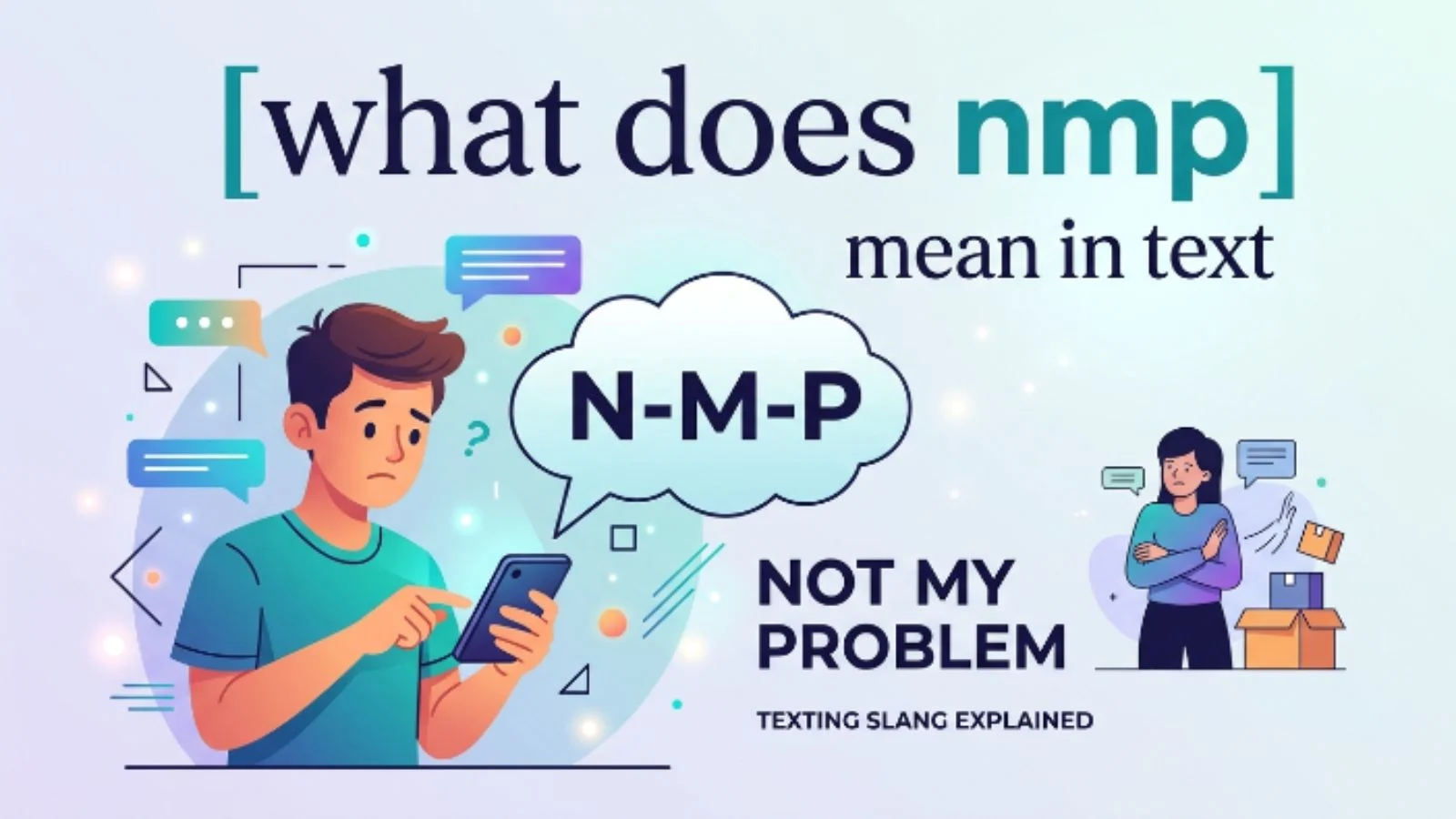
In most texting conversations, NMP stands for “Not My Problem.”
It is used when someone wants to show that a situation, issue, or responsibility does not belong to them.
It can sound casual, direct, or sometimes slightly rude depending on tone.
Simple Meaning of NMP (Easy Explanation)
In simple words:
NMP = “This is not my responsibility” or “I’m not involved in this problem.”
People use it when they want to distance themselves from an issue.
For example:
- Someone blames them for something
- A situation doesn’t involve them
- They don’t want to get emotionally or practically involved
So instead of writing a long explanation, they just type “NMP.”
Where Is “NMP” Used?
You will mostly see “NMP” in informal digital communication, such as:
1. Social Media
- Instagram comments
- Snapchat chats
- TikTok replies
2. Messaging Apps
- Messenger
- Discord
3. Online Gaming Chats
Gamers often use short slang like NMP during team arguments or coordination issues.
4. Casual Online Conversations
Anywhere people want quick replies without typing full sentences.
Why Do People Use NMP?
People use “NMP” for several reasons:
1. To Save Time
Typing full sentences like “That is not my problem” takes longer. NMP is faster.
2. To Show Detachment
It clearly shows that the person does not want involvement.
3. To Avoid Arguments
Instead of explaining, they use a short response to step away from drama.
4. Internet Culture
Short slang is part of modern online communication. People prefer quick, punchy replies.
Examples of NMP in Real Conversations
Let’s understand it with real-life style examples:
Example 1: Blame Situation
Friend 1: “We failed the project because you didn’t help.”
Friend 2: “NMP, I told you I was busy.”
Meaning: Friend 2 is saying they are not responsible for the failure.
Example 2: Drama Avoidance
Person A: “She got mad because you didn’t reply.”
Person B: “NMP, I don’t want drama.”
Meaning: Person B is distancing themselves from the situation.
Example 3: Group Chat Conflict
User 1: “Why didn’t you join the meeting?”
User 2: “NMP, I wasn’t informed.”
Meaning: User 2 is saying the issue isn’t their responsibility.
Example 4: Gaming Chat
Player 1: “We lost because you didn’t defend.”
Player 2: “NMP, I was lagging.”
Meaning: Player 2 is rejecting responsibility.
NMP vs Similar Internet Terms
Here’s how NMP compares with similar slang:
| Term | Meaning | Tone | Usage |
|---|---|---|---|
| NMP | Not My Problem | Neutral to defensive | When refusing responsibility |
| NVM | Never Mind | Casual | When dismissing something |
| IDK | I Don’t Know | Neutral | When unsure |
| IDC | I Don’t Care | Slightly rude | When showing disinterest |
| TMI | Too Much Information | Neutral | When something is overshared |
Key Difference
- NMP = Responsibility rejection
- Others like IDC or NVM are more about attitude or dismissal
When Should You Use NMP?
You can use “NMP” when:
- You are not involved in a situation
- Someone wrongly blames you
- You want to set a boundary quickly
- You are in informal chats with friends
But be careful:
It can sound harsh if used in serious conversations.
Common Misunderstandings About NMP
Many people misinterpret “NMP.” Let’s clear that up:
Misunderstanding 1: It Always Means Rude Behavior
Not always. Tone matters a lot. Among friends, it can be casual.
Misunderstanding 2: It Has Only One Meaning
In rare cases, NMP can mean different things like:
- “No More Posts” (social media context)
- “Not My Place” (similar meaning)
But in texting, “Not My Problem” is the most common meaning.
Misunderstanding 3: It’s Formal Language
No. It is strictly informal internet slang.
Pro Tips for Using NMP Correctly
If you plan to use “NMP,” keep these tips in mind:
1. Know Your Audience
Only use it with friends or casual conversations.
2. Watch Your Tone
Without emojis or explanation, it can sound cold or rude.
3. Don’t Use in Professional Chats
Avoid using it in:
- Work emails
- Formal messages
- Academic communication
4. Add Context if Needed
Sometimes adding a short explanation avoids misunderstandings:
- “NMP, I wasn’t involved in that.”
Why “NMP” Became Popular
Internet slang like NMP became popular because:
- People prefer fast communication
- Social media encourages short replies
- Group chats require quick responses
- Younger users create shorthand language naturally
Over time, these abbreviations become part of everyday texting culture.
Final Thoughts
“NMP” is a simple but powerful slang term in online communication. At its core, it means “Not My Problem,” and it is used when someone wants to clearly show they are not responsible or involved in a situation.
While it’s useful for quick replies, it can also sound sharp depending on how and where you use it. Understanding context is key.
If you use it wisely, it helps you communicate boundaries quickly in casual chats. But in formal or sensitive situations, it’s better to use full sentences to avoid misunderstanding.
FAQ: What Does NMP Mean in Text?
1. What does NMP mean in texting?
NMP usually means “Not My Problem,” used when someone wants to show they are not responsible for something.
2. Is NMP rude?
It can be. The tone depends on context. Among friends, it may seem casual, but in serious conversations it can sound dismissive.
3. Can NMP have other meanings?
Yes, in some contexts it can mean “No More Posts” or “Not My Place,” but these are less common.
4. Should I use NMP in formal messages?
No, it is informal slang and should be avoided in professional or formal communication.