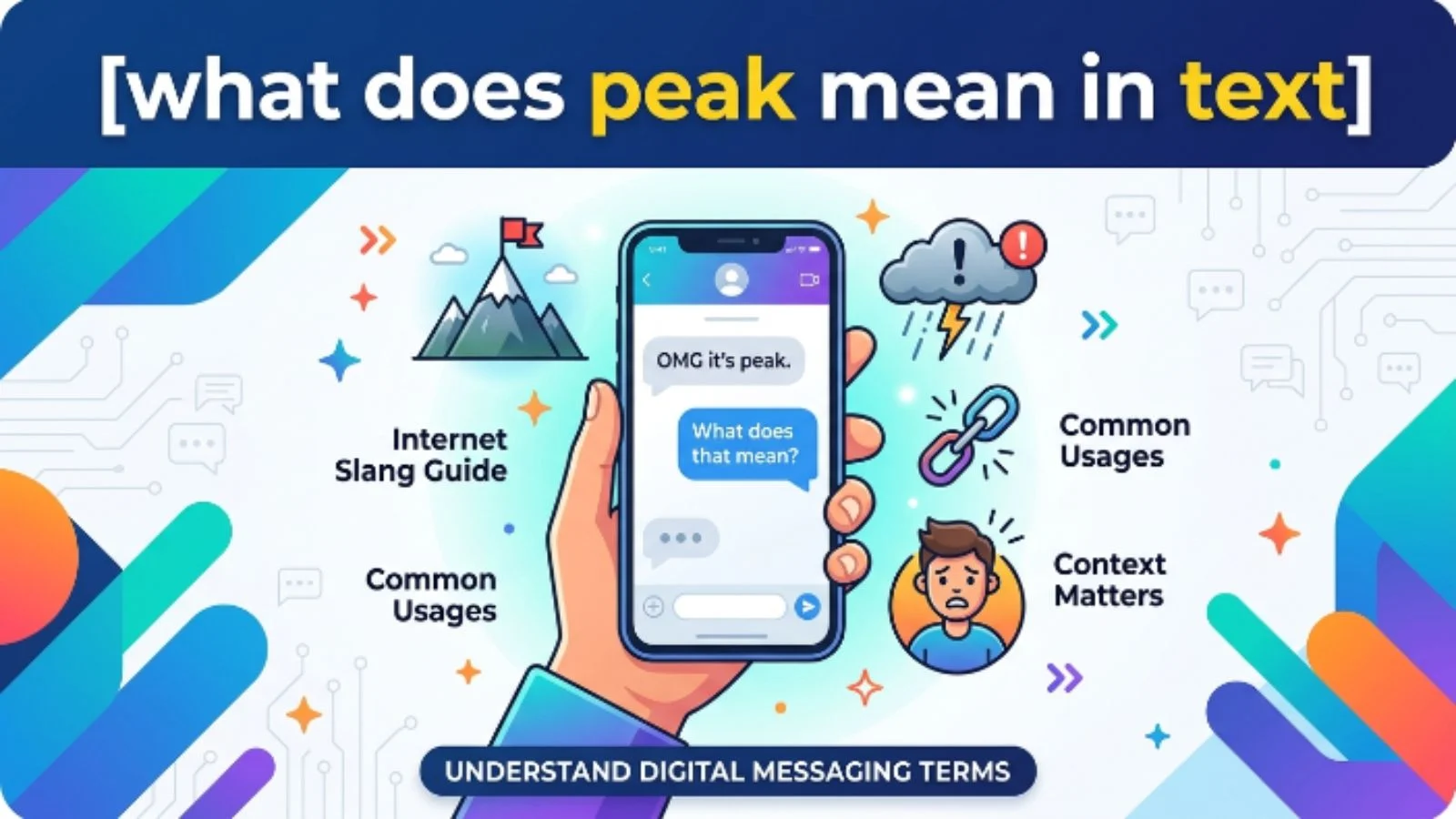
If you’ve seen someone reply with “peak” in a text message or on social media, you might wonder what they actually mean. Unlike many internet abbreviations, peak is a real English word that has taken on a popular slang meaning online.
In texting, “peak” usually describes a situation that is unfortunate, disappointing, awkward, or unfair. Depending on the context, it can also mean something is the absolute best or at its highest level. Because it has more than one meaning, understanding the conversation is important.
This guide explains what peak means in text, where people use it, how to recognize its different meanings, and when it’s appropriate to use.
What Does Peak Mean in Text?
Featured Snippet Definition:
Peak in text usually means something is unlucky, disappointing, embarrassing, or unfortunate. It is commonly used in online conversations, especially in British slang. In some situations, peak can also describe something that is the best, greatest, or at its highest level, depending on the context.
For example:
- “You forgot your wallet? That’s peak.”
- “That concert was peak.”
The first example means the situation is unfortunate, while the second means the concert was excellent.
Simple Meaning
In everyday English, peak can have two common slang meanings.
1. Something Bad or Unfortunate
People use peak when something goes wrong or someone has bad luck.
Examples include:
- Missing a flight
- Failing an exam
- Losing your phone
- Getting caught in heavy rain
In these situations, saying “That’s peak” means:
- That’s unfortunate.
- That’s rough.
- That’s really unlucky.
2. Something Extremely Good
Less commonly, especially online, peak describes something that is at its highest quality.
Examples:
- Peak entertainment
- Peak comedy
- Peak performance
Here, peak means:
- The best
- Top quality
- Outstanding
The surrounding conversation usually makes the meaning clear.
Where Is It Used?
You’ll see peak in many kinds of digital communication.
Text Messages
Friends often use it when reacting to someone’s bad luck.
Example:
“You lost your keys again? Peak.”
Social Media
Platforms like TikTok, Instagram, X, Facebook, and Snapchat regularly feature the word in comments and captions.
Examples:
- “That’s peak.”
- “Peak behavior.”
- “Peak comedy.”
Gaming
Gamers use peak after frustrating moments.
Examples:
- Losing a match because of lag
- Getting eliminated at the last second
Someone might simply type:
“Peak.”
Everyone understands the situation was unfortunate.
Online Communities
Forums, Discord servers, Reddit discussions, and group chats frequently use the term when reacting to stories, memes, or unexpected events.
Real-Life Conversations
The slang has also become common in spoken conversations, especially among younger people.
Someone might say:
“That’s honestly peak.”
instead of:
“That’s really unfortunate.”
Why Do People Use It?
People like using peak because it’s short, expressive, and easy to understand.
It quickly communicates emotion without needing a long explanation.
Common reasons include:
- Showing sympathy
- Reacting to bad luck
- Describing awkward situations
- Talking about disappointing events
- Praising something that is exceptionally good
- Making conversations sound casual
Because it is versatile, peak fits naturally into modern texting.
Real-Life Examples
Here are realistic examples of how people use peak in conversations.
Example 1
Alex: I missed the bus by five seconds.
Jamie: That’s peak.
Meaning: Jamie is saying Alex had bad luck.
Example 2
Taylor: My phone died before I could save my work.
Morgan: Peak.
Meaning: The situation is very unfortunate.
Example 3
Chris: That movie was peak.
Meaning: Chris thinks the movie was excellent.
Example 4
Jordan: It started raining right after I washed my car.
Sam: That’s so peak.
Meaning: Jordan experienced bad luck.
Example 5
Emma: His new album is peak.
Meaning: Emma believes the album is outstanding.
Example 6
Ryan: We lost in the final round because the internet disconnected.
Noah: Peak.
Meaning: Ryan’s loss was unlucky.
Example 7
Olivia: I studied the wrong chapter.
Mia: That’s peak.
Meaning: Olivia made an unfortunate mistake.
Example 8
Lucas: That goal was peak football.
Meaning: The goal represents the highest level of football skill.
Peak vs Similar Terms
| Term | Meaning | Typical Use |
|---|---|---|
| Peak | Unfortunate or excellent, depending on context | Casual texting and social media |
| Rough | Difficult or unfortunate | Everyday conversations |
| Unlucky | Bad luck | General English |
| Brutal | Extremely harsh or disappointing | Informal speech |
| Awesome | Very good | Positive situations |
| Legendary | Exceptionally impressive | Gaming, sports, internet slang |
| Top-tier | High quality | Reviews and online discussions |
While these words overlap, peak stands out because it can describe both negative and positive situations.
When Should You Use It?
Use peak when talking with friends or in casual online conversations.
It’s appropriate for:
- Text messages
- Group chats
- Gaming chats
- Social media comments
- Casual conversations
Avoid using it in:
- Business emails
- Academic writing
- Formal reports
- Professional presentations
In professional settings, words like unfortunate, excellent, or outstanding are usually clearer.
Common Misunderstandings
Many people misunderstand the slang because peak has several meanings.
Mistake 1: Thinking It Always Means “The Best”
While peak performance means the highest level, “That’s peak” often means the opposite—it usually refers to bad luck.
Mistake 2: Ignoring Context
Context completely changes the meaning.
Example:
“That concert was peak.”
Positive.
But:
“You lost your wallet? Peak.”
Negative.
Mistake 3: Assuming Everyone Uses It
The slang is especially popular in the UK and among younger internet users. Some people may not recognize it immediately.
Mistake 4: Using It in Formal Writing
Although common online, peak is informal slang and isn’t suitable for professional communication.
Pro Tips
Keep these tips in mind when you see or use peak.
- Read the whole conversation before deciding what it means.
- Look for emotional clues in the message.
- If someone is describing bad luck, peak probably means unfortunate.
- If they’re praising something, it likely means excellent.
- Use it naturally instead of forcing it into every conversation.
- Remember that slang meanings change over time and may vary by region.
Final Thoughts
The meaning of peak in text depends entirely on context. Most often, it describes something unlucky, disappointing, or unfortunate, especially in casual conversations and British slang. However, it can also mean the very best or highest quality when people are praising something.
Once you recognize the tone of the conversation, it’s usually easy to tell which meaning is intended. As internet slang continues to evolve, peak remains a simple but expressive word that helps people react quickly to both great moments and unfortunate situations.
Frequently Asked Questions
What does “peak” mean in texting?
In texting, peak usually means something unfortunate, unlucky, or disappointing. In some contexts, it can also mean something is excellent or at its highest quality.
Is “peak” positive or negative?
It can be both. Most commonly, it has a negative meaning, but it can also be positive when describing something outstanding.
Is “peak” British slang?
Yes. The slang meaning of peak is especially common in the UK, although it has spread to online communities around the world.
Can I use “peak” in formal writing?
No. Peak as slang is best reserved for casual conversations, texting, and social media. Formal writing should use more precise words like unfortunate, excellent, or outstanding.