Have you ever received a text that simply says “wtv” and wondered what the person actually meant?
At first glance, it may look like random letters. But WTV is a common texting abbreviation used in everyday conversations, especially on social media, messaging apps, and casual chats.
Depending on the situation, “wtv” can sound relaxed, indifferent, dismissive, or even slightly annoyed. That is why understanding the context matters.
In this guide, you’ll learn exactly what does wtv mean in text, how people use it, what it means in different conversations, and how it compares with similar abbreviations.
What Does WTV Mean in Text?
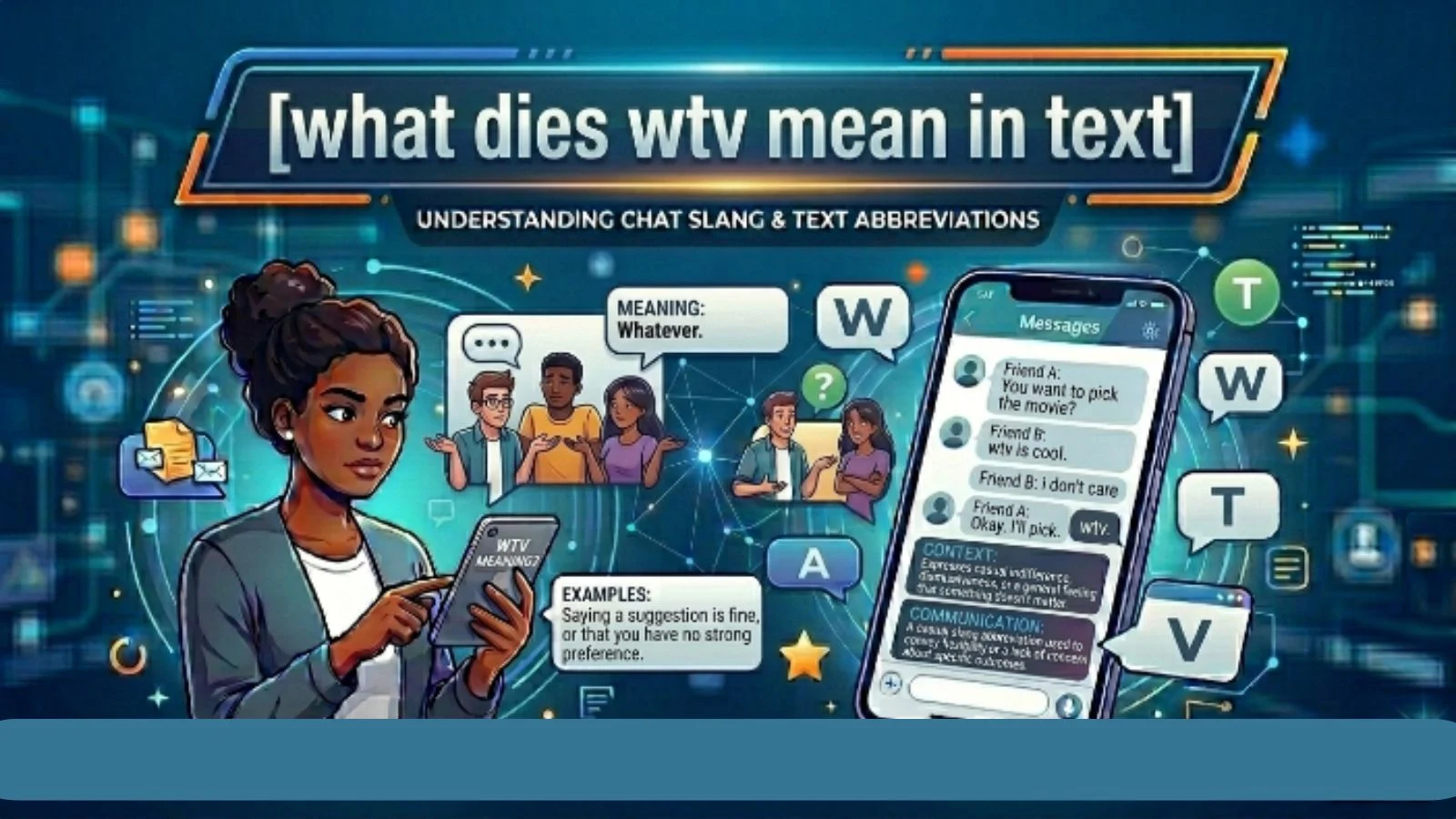
WTV usually means “whatever” in text messages and online conversations.
People use WTV as a shortened version of “whatever.” It can express that someone does not really care about a particular choice, situation, or opinion.
For example:
“Wtv, you can choose the restaurant.”
Here, “wtv” means “whatever.” The person is saying that they are okay with any choice.
However, the meaning can change slightly depending on the tone of the conversation.
Quick Definition
WTV = Whatever
It is an informal texting abbreviation commonly used when someone wants to say “whatever,” “I don’t mind,” or sometimes “I don’t care.”
What Does “Whatever” Mean in This Context?
The word “whatever” can have several emotional meanings, and the same is true for WTV.
Someone might use it because they genuinely do not have a preference.
For example:
“Pizza or burgers?”
“Wtv, I’m good with either.”
In this case, the person is being flexible.
But WTV can also sound dismissive:
“Wtv, do what you want.”
Here, the speaker may be frustrated or uninterested.
So, WTV does not always mean that someone is being rude. You need to consider the conversation, relationship, punctuation, and surrounding messages.
Why Do People Use WTV?
The biggest reason people use WTV is convenience.
Typing “whatever” takes longer than typing three letters. Texting culture has created many abbreviations that allow people to communicate quickly.
People may use WTV because:
- They are having a casual conversation.
- They want to respond quickly.
- They do not have a strong opinion.
- They want to show indifference.
- They are joking with a friend.
- They feel slightly annoyed.
- They want to avoid continuing an argument.
In most cases, WTV is more appropriate for casual communication than formal writing.
Where Is WTV Used?
You may see WTV in many types of online communication.
Text Messages
WTV is common in SMS and private messaging.
“What movie should we watch?”
“Wtv you want.”
The person is leaving the decision up to you.
Social Media
People may use WTV in comments, direct messages, or replies on social platforms.
For example:
“Wtv, I’m not arguing about it.”
The abbreviation helps make the message short and informal.
Group Chats
WTV is also common in group conversations where people are quickly discussing plans.
“Are we meeting at 6 or 7?”
“Wtv works for me.”
This means the person does not have a preference.
Gaming Chats
Gamers may use WTV during quick conversations.
“Which map?”
“Wtv.”
Here, the player is saying that either option is fine.
WTV Meaning Can Depend on Tone
One of the most important things to understand about WTV is that texting does not always show emotion clearly.
Consider these two examples:
“Wtv, I’m okay with it.”
“Wtv. Do whatever you want.”
Both contain the same abbreviation, but they can feel completely different.
The first sounds relatively relaxed.
The second may sound irritated, disappointed, or dismissive.
Friendly Use
A friend might say:
“Wtv, you pick the place.”
This usually means:
“I don’t mind. You can decide.”
Annoyed Use
Someone might say:
“Wtv. I’m done talking about it.”
This can mean:
“I don’t want to continue this conversation.”
Indifferent Use
Another example is:
“Should I wear the black shirt or blue one?”
“Wtv.”
This may simply mean that the person does not care which one you choose.
WTV Examples in Real Conversations
Understanding examples is one of the easiest ways to learn texting slang.
Example 1: Making Plans
Person A: “Do you want to eat pizza or Chinese food?”
Person B: “Wtv, both are good.”
Here, WTV means “whatever.” Person B has no strong preference.
Example 2: Choosing a Movie
Person A: “Comedy or horror?”
Person B: “Wtv you want.”
This means Person B is allowing the other person to choose.
Example 3: During an Argument
Person A: “You never listen to me.”
Person B: “Wtv.”
Here, WTV may sound dismissive. The person may be showing that they do not want to argue anymore.
Example 4: Casual Friendship
Person A: “Are we going out tonight?”
Person B: “Wtv works for me.”
This means the person is flexible about the plan.
Example 5: Showing Frustration
Person A: “You should have told me earlier.”
Person B: “Wtv, it’s done now.”
In this situation, WTV can communicate frustration or a desire to move on.
WTV vs. Similar Texting Terms
WTV is related to several other texting abbreviations, but they are not always interchangeable.
| Term | Meaning | Typical Tone |
|---|---|---|
| WTV | Whatever | Casual, indifferent, sometimes dismissive |
| IDC | I don’t care | More direct and potentially blunt |
| IDK | I don’t know | Uncertain or unsure |
| NVM | Never mind | Dropping or withdrawing a topic |
| IDGAF | I don’t give a f*** | Very blunt and vulgar |
| WHATEVER | Whatever | More direct; tone depends on context |
WTV vs. IDC
WTV and IDC can both communicate indifference, but they are not exactly the same.
“Wtv, you decide.”
This can sound casual.
“IDC, you decide.”
This may sound more direct and could come across as uncaring.
WTV vs. IDK
IDK means “I don’t know.”
For example:
“What time should we leave?”
“IDK.”
The person does not know the answer.
WTV is different:
“What time should we leave?”
“Wtv.”
The person may be saying that the exact time does not matter to them.
WTV vs. NVM
NVM means “never mind.”
It is often used when someone decides to drop a question or subject.
“Can you help me with this?”
“Actually, nvm.”
WTV generally means “whatever,” not “never mind.”
When Should You Use WTV?
WTV is best used in informal conversations.
It can work well when texting:
- Close friends
- Family members you communicate with casually
- People your age who regularly use texting slang
- Group chats
- Social media contacts
- Gaming friends
For example:
“Wtv, I’ll go with your plan.”
This sounds natural in a casual conversation.
When You Should Avoid WTV
You should generally avoid WTV in formal or professional communication.
For example, sending this to your manager would not be a good idea:
“Wtv, just let me know.”
It could sound careless or disrespectful.
Instead, you could write:
“Either option works for me. Please let me know what you prefer.”
Professional communication requires clearer and more respectful wording.
Can WTV Sound Rude?
Yes, WTV can sometimes sound rude, but it depends heavily on context.
If someone sends only:
“Wtv.”
You might interpret it as:
“I don’t care.”
That can feel dismissive, particularly during an argument.
But if someone says:
“Wtv you want, I’m happy either way.”
The meaning is much friendlier.
What Makes WTV Sound Rude?
Several factors can affect its tone:
- The subject of the conversation
- The relationship between the people
- Previous messages
- Punctuation
- Whether there is an ongoing argument
- The person’s usual texting style
A single abbreviation cannot always tell you exactly how someone feels.
Common Misunderstandings About WTV
Misunderstanding 1: WTV Always Means “I Don’t Care”
Not necessarily.
WTV can mean “whatever” in the sense of being flexible.
For example:
“Wtv you want to eat is fine.”
The person may simply be letting you choose.
Misunderstanding 2: WTV Is Always Rude
No.
Friends often use WTV casually without any negative intention.
For example:
“Wtv haha, let’s just go.”
The surrounding conversation can make the abbreviation feel playful rather than rude.
Misunderstanding 3: WTV Is Appropriate Everywhere
WTV is informal slang.
It is generally better suited to casual conversations than professional emails, job applications, academic assignments, or business messages.
Misunderstanding 4: WTV Has Only One Emotional Meaning
The basic definition is “whatever,” but the emotional tone can range from relaxed to annoyed.
That is why context is so important.
How to Respond When Someone Says WTV
Your response depends on what the person seems to mean.
If They Mean “I Don’t Mind”
You can simply make the decision:
“Okay, let’s go with pizza.”
If They Seem Annoyed
It may be better to avoid escalating the conversation.
You could say:
“No worries. We can talk about it later.”
If You’re Unsure
Ask directly:
“Do you mean you don’t mind, or are you upset?”
This can prevent unnecessary misunderstandings.
Pro Tips for Understanding WTV
Here are a few practical tips to remember:
- Look at the full conversation, not just the abbreviation.
- Pay attention to whether the person usually uses texting slang.
- Consider punctuation and surrounding words.
- Don’t automatically assume WTV is rude.
- If the conversation is emotional, ask for clarification.
- Avoid using WTV in professional communication.
- Remember that text messages can make tone difficult to interpret.
The most important rule is simple: context determines tone.
Is WTV the Same as “Whatever”?
Yes.
In texting and social media conversations, WTV is generally a shortened form of “whatever.”
The abbreviation saves time and makes messages more casual.
For example:
“Wtv you decide is fine.”
Essentially means:
“Whatever you decide is fine.”
The main difference is that WTV is much more informal.
Frequently Asked Questions
What does WTV mean in text?
WTV usually means “whatever.” It is a casual texting abbreviation used to express indifference, flexibility, or a lack of concern about something.
Is WTV rude?
WTV can sound rude or dismissive, especially when it is used alone during an argument. However, it can also be completely casual and friendly when someone simply means they have no preference.
What does WTV mean on social media?
On social media, WTV generally means “whatever.” People use it in comments, direct messages, captions, and casual conversations to express indifference or flexibility.
What is the difference between WTV and IDC?
WTV means “whatever,” while IDC means “I don’t care.” They can have similar meanings, but IDC is often more direct and may sound harsher depending on the situation.
Final Thoughts
So, what does WTV mean in text? In most conversations, it simply means “whatever.”
It is a short, informal abbreviation that people use when they do not have a strong preference, want someone else to decide, or want to show that something does not matter much to them.
However, the tone of WTV can change dramatically depending on the situation. A message such as “Wtv, you choose” can sound relaxed, while “Wtv. Do what you want” may sound annoyed or dismissive.
The best way to understand WTV is to look at the whole conversation, not just the three letters.
If you’re texting friends or chatting casually online, WTV is a common and understandable abbreviation. Just remember that it is informal, so clearer wording is usually better for professional conversations.