You’re texting someone.
They reply with “ikk.”
And now you’re staring at your screen thinking…
“Wait… what does ikk mean in text?”
Is it good? Is it rude? Is it a typo?
Don’t worry. You’re not alone.
Let’s break it down in simple, clear English so you know exactly what it means — and when you should (or shouldn’t) use it.
What Does IKK Mean in Text?
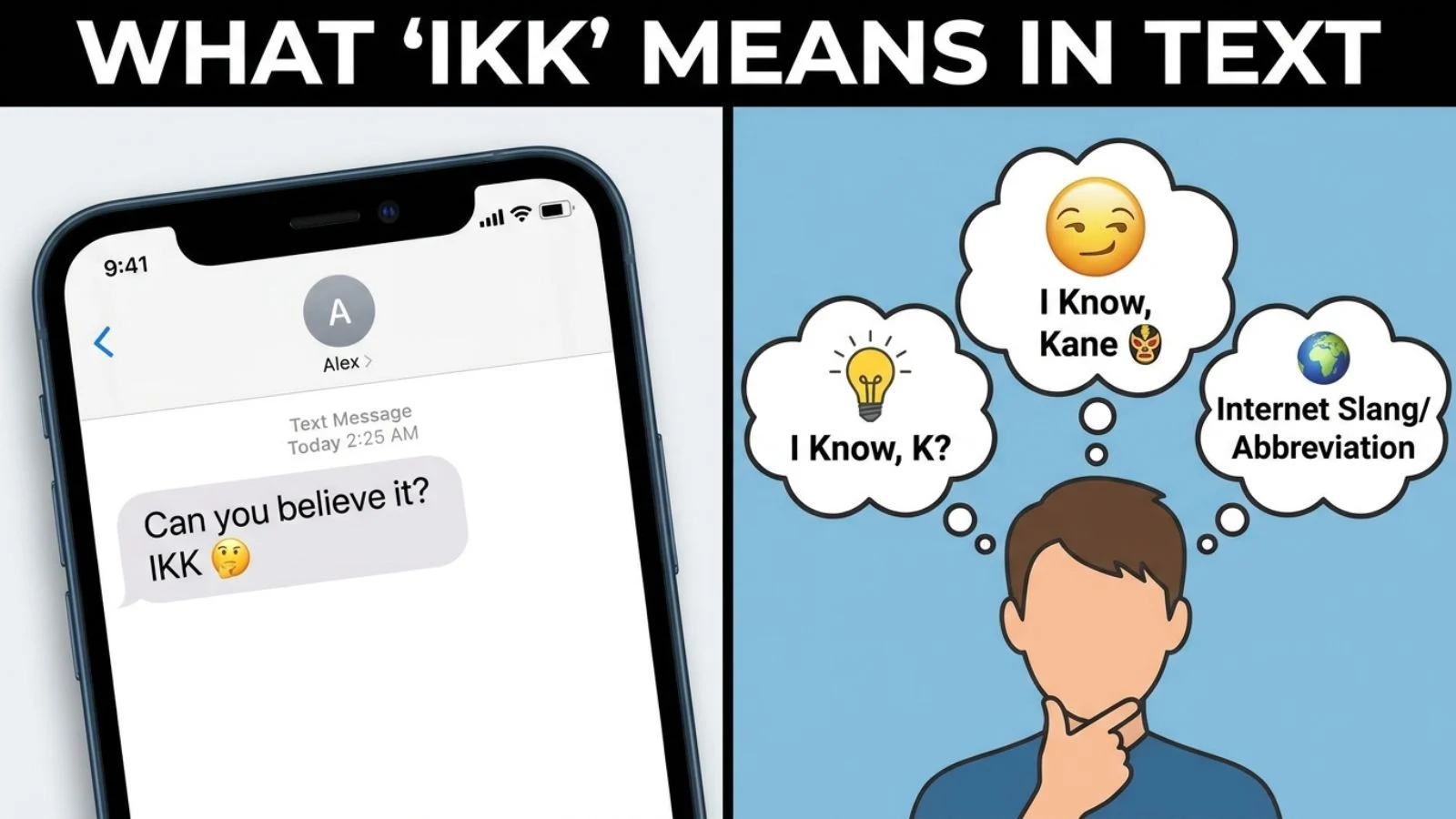
IKK in text usually means “I know, okay” or “I know, right.”
It’s a casual slang expression used in texting and social media conversations.
People use “ikk” to show agreement, confirmation, or emotional reaction to something.
In short:
IKK = I know (with extra emphasis or emotion).
Simple Meaning of IKK
Here’s the easiest way to understand it.
When someone says “ikk”, they are basically saying:
- “Yes, I know.”
- “I agree.”
- “Right?”
- “I totally get it.”
It often carries a tone. Sometimes excited. Sometimes annoyed. Sometimes sarcastic.
The meaning depends on the conversation.
Where Is IKK Used?
You’ll mostly see ikk in casual conversations, not formal writing.
Common places include:
- Text messages
- Snapchat chats
- Instagram DMs
- TikTok comments
- Group chats with friends
It’s not something you’d use in:
- School essays
- Work emails
- Professional messages
It’s strictly informal.
Why Do People Use IKK?
Good question.
Why not just say “I know”?
Because texting is about speed and emotion.
Here’s why people use it:
1. It Sounds More Expressive
“ikkk” (with extra k’s) adds emotion.
For example:
- “That movie was amazing.”
- “IKKK!”
The extra letters show excitement.
2. It Feels Friendly
Slang makes conversations feel casual and relaxed.
3. It Shows Agreement Quickly
Instead of typing a long reply, you just say “ikk.”
Simple. Fast. Done.
Real-Life Examples of IKK in Text
Let’s look at real conversations so you can understand it better.
Example 1: Agreement
Friend: “That test was so hard.”
You: “Ikk.”
Meaning: You agree the test was hard.
Example 2: Excitement
Friend: “He finally texted me back!”
You: “IKKK!”
Meaning: You’re excited and happy for them.
Example 3: Annoyance
Friend: “She keeps talking about him.”
You: “Ikk, it’s so annoying.”
Meaning: You understand and share the frustration.
Example 4: Relatable Moment
Friend: “Why do we overthink everything at night?”
You: “Ikk right?”
Meaning: You feel the same way.
IKK vs Similar Text Slang
Sometimes people confuse ikk with other slang terms.
Here’s a simple comparison:
| Slang | Meaning | Tone | When Used |
|---|---|---|---|
| IKK | I know / I know right | Emotional, casual | Agreement or reaction |
| IK | I know | Neutral | Simple confirmation |
| FR | For real | Strong agreement | Emphasizing truth |
| OMG | Oh my God | Surprise | Shock or excitement |
| YK | You know | Explaining something | Clarification |
The key difference?
IKK feels more expressive than IK.
Is IKK the Same as “Ick”?
No.
This is a common misunderstanding.
- IKK = I know
- Ick = A feeling of disgust or sudden turn-off
Example:
“I got the ick.”
That means you suddenly feel unattracted to someone.
Totally different meaning.
Don’t mix them up.
When Should You Use IKK?
You can use ikk when:
- You’re talking to friends
- You’re reacting emotionally
- You agree strongly with someone
- You want to keep things casual
You should avoid it when:
- Talking to your boss
- Writing professional emails
- Speaking in formal situations
- Messaging teachers
It’s best saved for friendly conversations.
Different Variations of IKK
People sometimes stretch it for emphasis.
You might see:
- Ikk
- Ikkk
- Ikkkk
- IKK
- IKKK
The more “k’s” added, the stronger the emotion.
For example:
- “Ikk.” = Calm agreement.
- “IKKKK.” = Strong excitement.
The tone changes based on how it’s typed.
Does IKK Ever Mean Something Else?
Very rarely, yes.
In some contexts, IKK can also stand for:
- “I know, okay”
- “I know, kid”
- Or it might simply be a typo for “IK”
But 90% of the time in texting, it means “I know.”
Context always matters.
Common Misunderstandings About IKK
Let’s clear up confusion.
1. Is it rude?
Not usually.
But tone matters.
If someone replies with just “ikk.” and nothing else, it can feel dismissive.
2. Is it sarcastic?
Sometimes.
If someone says:
“That was such a smart idea.”
And you reply:
“Ikk…”
It might sound sarcastic depending on context.
3. Is it only used by teenagers?
Mostly younger people use it.
But slang spreads fast.
Adults use it too in casual chats.
Pro Tips for Using IKK Correctly
If you want to use it naturally, follow these tips:
Keep It Casual
Only use it with people you’re comfortable with.
Match the Energy
If someone is excited, “IKKK” works.
If they’re calm, just “ikk” is better.
Don’t Overuse It
If every message you send is “ikk,” it gets repetitive.
Pay Attention to Tone
Text has no facial expressions.
So be careful how your message might sound.
Is IKK Popular Right Now?
Yes.
Short slang words are trending because:
- People text fast
- Attention spans are short
- Casual communication is the norm
Social media platforms especially encourage quick, emotional reactions.
IKK fits perfectly into that style.
What IKK Really Says About Digital Language
Language online is changing.
People shorten words.
They stretch letters.
They drop punctuation.
Why?
Because texting is about feeling, not grammar.
IKK is part of that evolution.
It’s less about dictionary meaning.
It’s more about tone and connection.
Final Thoughts on What IKK Mean in Text
So now you know.
If someone texts you “ikk,” they’re basically saying:
“I know.”
“I agree.”
“Right?”
“I feel the same.”
It’s casual.
It’s expressive.
It’s friendly.
And now you won’t feel confused when you see it again.
FAQ About IKK in Text
1. What does ikk mean in text from a girl?
It usually means “I know” or “I know right.” The meaning doesn’t change based on gender. Context matters more than who says it.
2. Is ikk rude in texting?
Not usually. But if it’s short and blunt, it can feel dismissive depending on the situation.
3. What does ikkk mean with extra k’s?
Extra letters show stronger emotion. “IKKK” usually means excitement or strong agreement.
4. Is ikk different from ik?
Yes. “IK” is neutral. “IKK” feels more expressive and emotional.