If you saw “W.E” in a text message and felt confused, you are not alone.
Many people see this short form in chats, comments, or social media posts. They wonder what it means. Is it rude? Is it friendly? Does it show anger?
In this easy guide, you will learn:
- The clear meaning of W.E
- Where it came from
- How people use it in real life
- What tone it shows
- Common mistakes
- Modern 2026 examples
- FAQs people often ask
Let’s start simple.
What Does W.E Mean in Text?
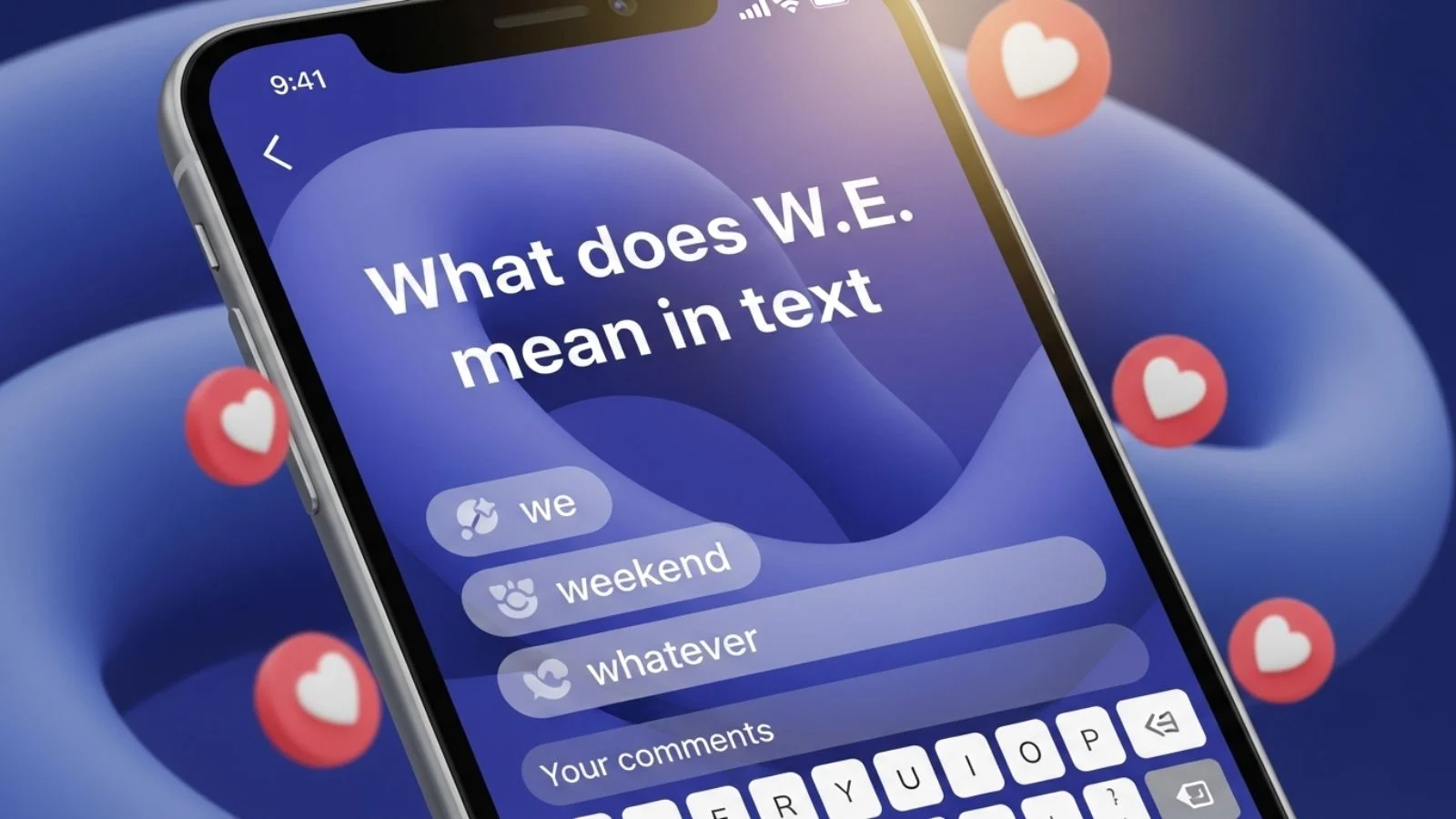
W.E means “Whatever.”
It is a short way to say:
- I don’t care
- It does not matter
- Do what you want
- I am not interested in arguing
In simple words, W.E shows indifference.
It can sound:
- Calm
- Tired
- Annoyed
- Dismissive
The meaning depends on tone and situation.
W.E Meaning in Very Simple Words
Here is the easiest way to understand it:
| Short Form | Full Meaning | Simple Explanation |
|---|---|---|
| W.E | Whatever | I don’t care much |
| W.E | Whatever | Do what you want |
| W.E | Whatever | I am done talking |
If someone texts:
“W.E.”
It usually means:
“I am not going to argue anymore.”
Why Do People Write W.E Instead of Whatever?
People use W.E because:
- It is short
- It is fast to type
- It feels casual
- It saves time
In texting culture, shorter words are common. Just like:
- LOL
- IDK
- BTW
W.E is part of modern texting language.
Origin and History of W.E
The word “whatever” has existed for hundreds of years. It simply means:
“Anything at all.”
But the short form W.E became popular in the late 1990s and early 2000s.
It grew because of:
- SMS texting
- Online chat rooms
- Early social media platforms
- Instant messaging apps
Back then, people had limited characters in messages. So they shortened words.
Over time, W.E became a symbol of teenage attitude.
By 2026, it is still used, but more carefully. Now, people know it can sound rude.
Is W.E Rude?
It can be.
It depends on tone.
Let’s see:
When W.E Is Neutral
If someone says:
“We can eat pizza or burgers.”
Reply: “W.E works.”
Here, it means:
“I am okay with anything.”
This is polite and easy.
When W.E Sounds Rude
Friend: “You forgot to call me.”
Reply: “W.E.”
Here, it sounds like:
“I don’t care.”
This feels dismissive.
So always check context.
Real-Life Examples of W.E in Text
Let’s look at simple examples.
Each one includes a short explanation.
Example 1: Casual Use
A: “Which movie should we watch?”
B: “W.E. You choose.”
Explanation: B does not mind. They trust the other person to decide.
Example 2: Slight Annoyance
A: “You’re wrong.”
B: “W.E.”
Explanation: B does not want to argue anymore.
Example 3: Friendly Tone
A: “Blue shirt or black shirt?”
B: “W.E looks better.”
Explanation: B is relaxed and flexible.
Example 4: Dismissive Tone
Parent: “You need to study.”
Teen: “W.E.”
Explanation: The teen sounds annoyed or uninterested.
Example 5: Relationship Context
Partner 1: “You never listen.”
Partner 2: “W.E.”
Explanation: This can hurt feelings because it feels cold.
Short Dialogues With Explanation
Here are more short dialogues for beginners.
Dialogue 1
Friend: “Let’s go at 5 PM.”
You: “W.E is fine.”
Meaning: You agree with any time.
Dialogue 2
Friend: “I think you made a mistake.”
You: “W.E.”
Meaning: You don’t want to continue the discussion.
Dialogue 3
Sibling: “That’s not fair!”
You: “W.E.”
Meaning: You feel tired or irritated.
Dialogue 4
Classmate: “Group A or B?”
You: “W.E.”
Meaning: You are flexible.
Personality Traits Behind Using W.E
The way someone uses W.E can show personality traits.
Here are common ones:
1. Easygoing Personality
- Does not care about small choices
- Flexible
- Relaxed
Example: “W.E works for me.”
2. Avoidant Personality
- Avoids arguments
- Does not like conflict
- Ends discussions quickly
Example: “W.E.” during debate.
3. Passive-Aggressive Personality
- Feels upset
- Does not want to explain feelings
- Uses short replies
Example: “W.E.” after criticism.
4. Confident and Independent
- Does not seek approval
- Moves on quickly
Example: “W.E. I’ll do it my way.”
Different Meanings of W.E Based on Tone
Tone changes everything.
| Tone | Meaning |
|---|---|
| Calm | I’m okay with anything |
| Annoyed | I don’t care anymore |
| Angry | Stop talking |
| Playful | You decide |
Text does not show tone clearly. That is why misunderstandings happen.
Modern Usage of W.E in 2026
In 2026, communication is fast. People use:
- Short texts
- Voice notes
- AI chats
- Social media comments
W.E is still used, but less than before.
Why?
Because people now care about clear communication.
Younger users prefer:
- “It’s fine.”
- “Up to you.”
- “All good.”
These sound softer than W.E.
Still, W.E appears in:
- TikTok comments
- Instagram replies
- Gaming chats
- Group chats
W.E on Social Media
Here is how it appears online:
Comment: “Your opinion is wrong.”
Reply: “W.E.”
This means: “I’m not arguing.”
Another example:
Post: “Should I post this?”
Comment: “W.E. Go for it.”
This means: “It doesn’t matter. Just do it.”
Common Mistakes About W.E
Many people misunderstand it.
Let’s clear things up.
Mistake 1: Thinking It Always Means Rude
Wrong: W.E is always disrespectful.
Correct: It depends on context.
Mistake 2: Using It in Formal Settings
Do not write W.E in:
- Job emails
- School essays
- Business chats
It looks unprofessional.
Mistake 3: Overusing It
If you always reply “W.E,” people may think:
- You don’t care
- You are not interested
- You are lazy
Balance matters.
Mistake 4: Confusing W.E with WE
W.E (with dots) = Whatever
WE (no dots) = We (plural pronoun)
Example:
“WE are ready.” means “We are ready.”
“W.E.” means “Whatever.”
They are not the same.
When Should You Use W.E?
Use it when:
- You truly don’t mind
- The choice is small
- You are relaxed
- You are joking
Avoid it when:
- Someone is serious
- Someone is upset
- It’s a formal conversation
- Emotions are high
Better Alternatives to W.E
If you want to sound kinder, try:
- “It’s up to you.”
- “I don’t mind.”
- “Either is fine.”
- “Your choice.”
- “No problem.”
These sound softer.
Emotional Impact of W.E
Short replies can feel cold.
If someone says:
“I’m really hurt.”
And the reply is:
“W.E.”
This feels dismissive.
Texting has no facial expression. So short words can seem harsh.
W.E in Friendships
Among close friends, it may not sound bad.
Example:
Friend: “Pink or green?”
You: “W.E.”
Close friends understand tone.
But in new friendships, it may create distance.
W.E in Relationships
In romantic relationships, W.E can:
- Stop arguments
- Create emotional walls
- Show frustration
Healthy communication is better than short dismissive replies.
Quick Comparison Table
| Expression | Meaning | Tone |
|---|---|---|
| W.E | Whatever | Neutral or annoyed |
| IDK | I don’t know | Neutral |
| Fine | It’s okay | Can be passive-aggressive |
| Up to you | Your choice | Polite |
Psychological Insight
When people say W.E, they may:
- Feel tired
- Feel unheard
- Feel defensive
- Want control
It is often a defense word.
Instead of arguing, they close the conversation.
Is W.E Popular in 2026?
Yes, but less than before.
Trends show:
- People prefer clearer words
- Emotional intelligence matters more
- Short cold replies are less appreciated
Still, W.E survives in:
- Casual chats
- Meme culture
- Teen conversations
FAQs About W.E Meaning in Text
1. What does W.E mean in text from a girl?
It means “Whatever.”
It may show she is neutral, annoyed, or done arguing. Tone matters.
2. Is W.E rude in a relationship?
It can be.
If used during emotional talks, it may feel dismissive.
3. What does W.E mean on Snapchat or Instagram?
It means “Whatever.”
Usually used in comments or replies to end discussion.
4. Is W.E the same as whatever?
Yes.
It is just a shortened form.
5. Should I reply with W.E?
Only if the topic is small and casual.
Avoid it in serious conversations.
6. Why do teens use W.E?
Teens use it to show attitude, independence, or boredom.
7. Can W.E mean something else?
In texting, it almost always means “Whatever.”
In other fields, it could have different meanings, but in chat, this is the main one.
Final Thoughts on W.E Meaning in Text
So, what does W.E mean in text?
It simply means “Whatever.”
It can show flexibility, tiredness, or annoyance. The meaning changes based on tone and context. In casual chats, it may sound fine. In serious talks, it can feel cold.
In 2026, communication is more mindful. People prefer clearer and kinder words. Before typing “W.E,” think about how the other person may feel.
If you want better texting skills and deeper language understanding, keep learning modern digital expressions and how tone shapes meaning. Small words can carry big emotions.